The Fury and Humor of Frederick Wiseman
Share
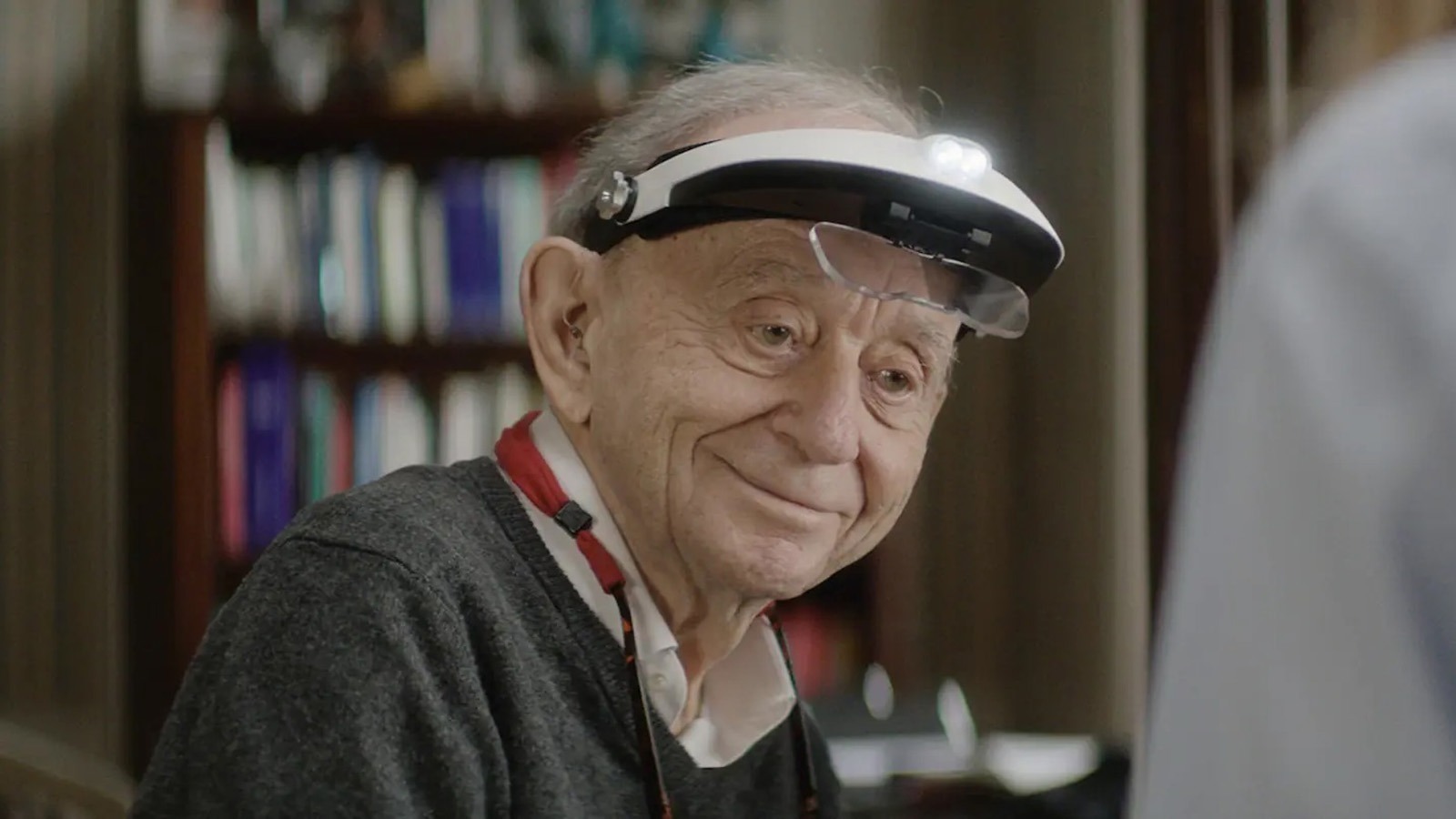
It would take nearly five full, round-the-clock days to watch all forty-three of Frederick Wiseman’s nonfiction features back to back, from Titicut Follies (1967) to Menus-Plaisirs—Les Troisgros (2023). That marathon would offer no talking-head interviews, no voiceover narration or explanatory text, no artificial lighting, and no mood-setting, non-diegetic music. “His movies are stylistically ur-vérité,” wrote Errol Morris in a 2011 Paris Review appreciation of his “idol” that many tributes have been pointing to since Wiseman passed away on Monday at the age of ninety-six.
Wiseman “may be a direct-cinema guy in form,” wrote Morris, “but the content is not valetudinarian but visionary and dystopian. Wiseman has never been a straight vérité ‘documentarian.’ He is a filmmaker and one of the greatest we have.”
Great, yes, but dystopian? Asserting that Wiseman “had the honesty and supreme decency to portray human society for what it is: a madhouse,” Morris wrapped his ode with a declaration: “For me, Wiseman is the undisputed king of misanthropic cinema.” In an excellent essay for the New York Review of Books, Andrew Katzenstein took note last year of Wiseman’s response to Morris’s bottom line: “I’ve told Errol several times: sheer projection.”
For Katzenstein, Wiseman’s patient and multifaceted portraits of institutions in films such as High School (1968), Public Housing (1997), and Ex Libris: The New York Public Library (2017) or communities in films like Belfast, Maine (1999), In Jackson Heights (2015), and Monrovia, Indiana (2018) are “immensely entertaining. His eye for detail—for the telling action or artifact—is astounding. Much of this detail is comic, as Dan Armstrong argued nearly forty years ago in a brilliant essay: ‘Wiseman’s is fundamentally a cinema of the absurd in which the political messages are often oddly inflected through an absurdist mélange of irony, parody, black humor, and burlesque.’ He’s drawn to moments when the mask falls off, when people are revealed in all their confusion, bumbling idiocy, and false pride.”
Born in Boston, Wiseman studied law at Yale, served in the Army for two years in the mid-1950s, and then bopped around Paris for a couple of more years, watching several films a week and shooting his first 8 mm home movies, many of them featuring his wife, Zipporah Batshaw. Returning to the States, he took a job teaching legal medicine.
“I tried to make it more interesting for the students by taking them on field trips to places where their clients might end up if they didn’t represent them properly,” he told Eric Hynes in Metrograph’s Journal in 2016. “One of the places I took them to was the Bridgewater State Prison for the criminally insane. Over the years I must have gone down there three or four times. I also took them to parole board hearings and trials and probation hearings, and tried to expose them to the reality of the full process of what they call the criminal justice system. I just had the idea that there was no reality to reading appellate court decisions.”
Having produced Shirley Clarke’s The Cool World (1963) and realizing that he’d rather be directing and editing his own films, Wiseman returned to Bridgewater and obtained permission to start shooting. Ignoring the camera manned by John Marshall—Wiseman nearly always recorded sound and communicated with his cinematographers, usually William Brayne and then John Davey, via hand signals—the staff at Bridgewater relentlessly force fed, strip-searched, and browbeat inmates.
Just before Titicut Follies was to premiere at the 1967 New York Film Festival, the governor of Massachusetts tried to block the screening. When the film arrived in Chicago for a brief run the following year, Roger Ebert called it “one of the most despairing documentaries I have ever seen; more immediate than fiction because these people are real; more savage than satire because it seems to be neutral.”
In 1969, the Massachusetts Supreme Court ordered that Titicut could only be shown to legal and medical professionals, making the film the first to be banned in the U.S. for reasons other than obscenity, immorality, or national security. Wiseman appealed to the Supreme Court but was met with a refusal to hear the case. The ban stuck until a Massachusetts judge lifted it in 1991, and PBS broadcast Titicut Follies shortly thereafter.
In Law and Order (1969), a police officer tells a woman he’s holding, “Go ahead and resist. I’ll choke you until you can’t breathe.” The Guardian’s Peter Bradshaw suggests that Wiseman’s “masterpiece is arguably Welfare, from 1975, a huge study of the social provision bureaucracy in New York whose title has an irony as vast and inscrutable as the place itself. We see a wide array of people, stressed officials, security guards, and desperate claimants; Wiseman shows that the welfare office, like Kafka’s Castle, both imprisons and repels them; they cannot penetrate it—or escape it.” Writing for the BFI, Philip Concannon pinpoints “a recurring question that runs throughout Wiseman’s body of work: how do we treat the most vulnerable in our society? What kind of community do we want to live in?”
In a piece on Wiseman that 4Columns ran last year, Andrew Chan noted that “the outrage of his earliest films gave way to a more slippery understanding of morality.” Near Death (1989), shot primarily in the intensive care unit of a Boston hospital, “stands tall among these exquisitely ambivalent works; despite the clinical atmosphere of [some scenes], this six-hour, black-and-white odyssey through ICU purgatory is also about a shared effort to sustain sympathy—both that of the healthcare workers, who endlessly debate the ethics of prolonging a patient’s life until loved ones can make peace with the inevitable, and that of the families, who try to keep their faith in the doctors’ cautiously hedged, sometimes comically circular explanations.”
Wiseman allowed his own curiosity to guide him from subject to subject. An ad he spotted in a magazine while waiting in a doctor’s office sparked the idea that led to Model (1981). After shooting over a period of several weeks or even a few months, Wiseman would, as he often explained, begin the actual writing and shaping of a film at the editing table. In the New York Times, John Anderson points out that La Danse (2009), which tracks the development of seven shows at the Paris Opera Ballet, was honed down to just over two and a half hours from around 150 hours of raw footage.
“I don’t know if I can offer a general definition of what I’m doing,” Wiseman told the NYT in 2011, “except to say I’m trying to create dramatic structures out of ordinary experience, under a variety of differing circumstances, so the cumulative effect will be a series of thematically interrelated films that record how people thought and lived and worked over the course of time that I made the movies.”
“Wiseman’s films are sometimes massive,” wrote Max Nelson in his review of National Gallery (2014) for Reverse Shot, “but they never confound. The voice in which they speak is crisp, plainspoken, unembellished, and yet hugely flexible, capable of shifting tonal registers with undetectable ease. Like Richard Linklater, with whom he shares a fine-tuned eye for the way people negotiate space and a distinctly American knack for unshowy displays of wit and intelligence, Wiseman is constantly evaluating his subject-characters—celebrating their heroisms and zeroing in on their moments of weakness, arrogance, or cruelty—without ever subjecting them to a final verdict.”
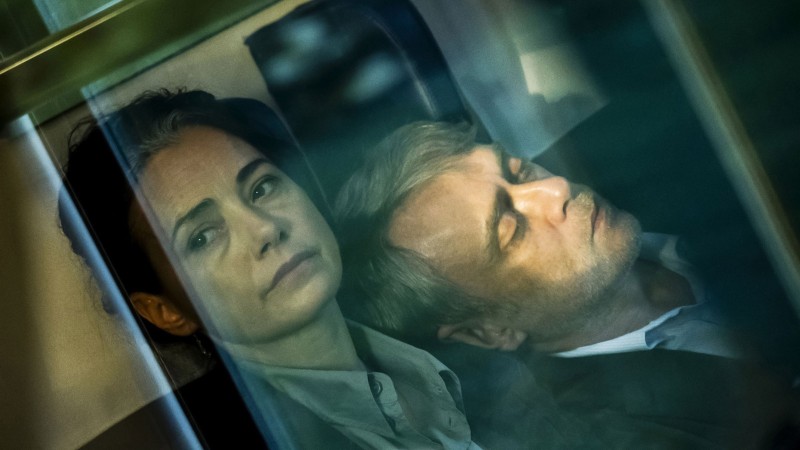
National Gallery takes us behind the scenes at the renowned London institution, and especially in his later years, Wiseman shot a few of his films—including A Couple (2022), one of his rare fictional features—in France. But for the most part, as Sam Adams points out at Slate, “he built an ever-growing portrait of American life that stands with the most monumental oeuvres in any art form.”
In the Guardian, Dee Jefferson notes that Wiseman “described his films as closer to ‘visual novels’ than journalistic accounts.” Profiling Wiseman for the New York Times Magazine in 2020, Mark Binelli remarked that Wiseman’s oeuvre “represents the nearest contemporary equivalent I can think of” to the ever-elusive Great American Novel.
“The greatness of his work isn’t only in its documentation of extraordinary events but in the fervor with which Wiseman himself experiences them,” writes the New Yorker’s Richard Brody. “As much as with any director of the most intimate personal fictions, Wiseman’s nonfictions could be laid end to end and viewed in continuity, like the story of an extraordinary life.”
Don’t miss out on your Daily briefing! Subscribe to the RSS feed.