January Books
Share
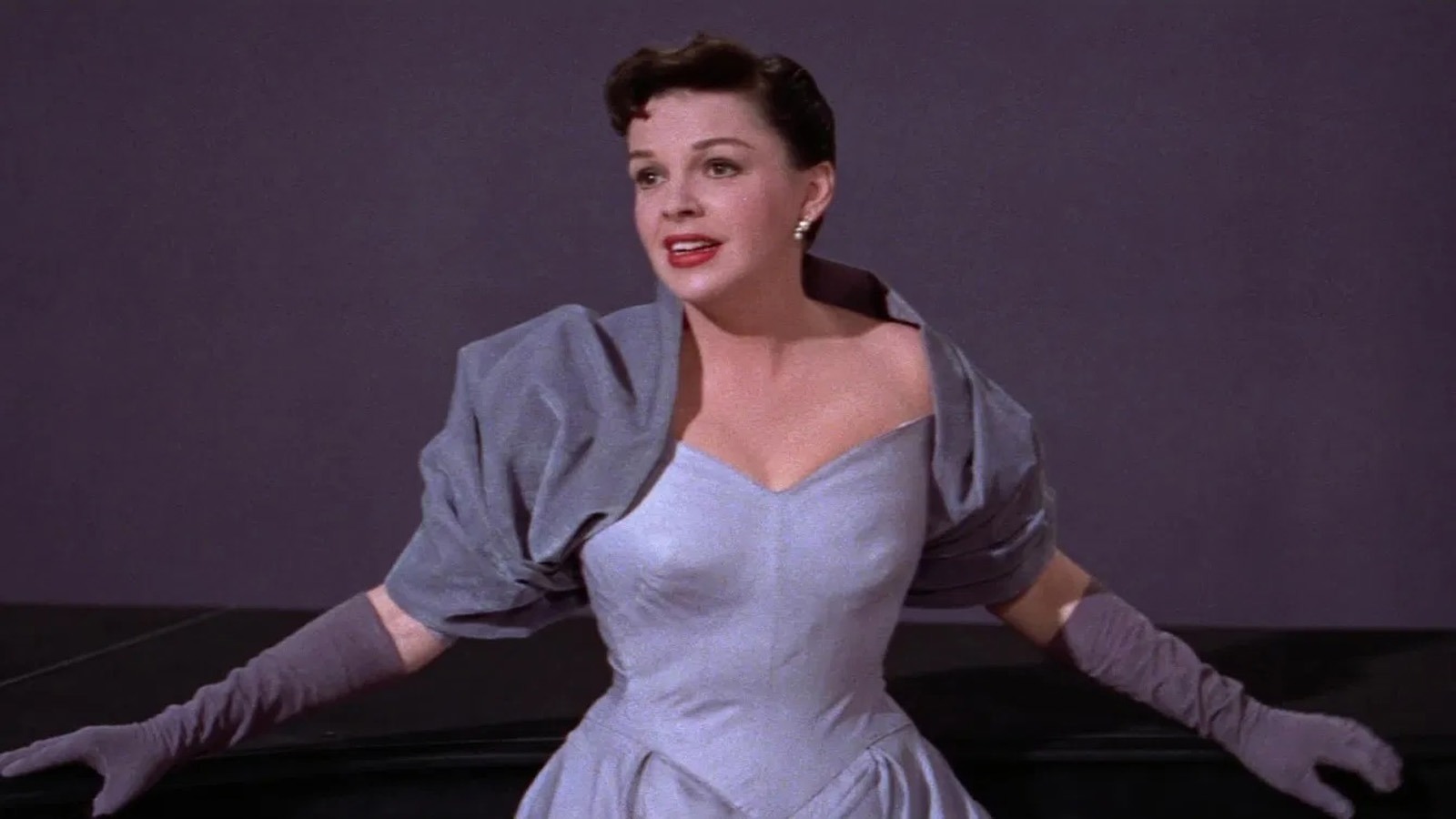
A few weeks ago on Slate’s Culture Gabfest, Stephen Metcalf recommended Bee Wilson’s piece in the London Review of Books on Scott Brogan’s Judy Garland: The Voice of MGM—and for good reason. Wilson reminds us that Gene Kelly, who could be hard on his female costars, marveled at Garland’s “ability to know a song after hearing it once and to ‘pick up a step instantly.’ Fred Astaire, that other dancing perfectionist, said that she was ‘the greatest entertainer who ever lived—or probably will ever live.’” And from Frank Sinatra: “The rest of us will be forgotten. Never Judy.”
“To be a Garland fan is to have the illusion that you can save her from the wounds of the world, even as her voice and her eyes and her gloriously melodic laugh seem instead to be saving you,” writes Wilson. “Much as we may fantasize about comforting her, we will never know whether a happier Judy would have moved us as much. One of the great mysteries about Garland is the extent to which her vulnerability when performing was a calculated act. She seems to have had an excruciating need for validation as a performer: a neediness we can almost touch on screen. Yet she told Dirk Bogarde—her costar in I Could Go on Singing, her final film—that she knew how to hurt audiences where they thought they wanted to be hurt.”
Directors’ Dedications
Scorsese on Filmmaking and Faith is a collection of seven conversations conducted over the course of eight years between Martin Scorsese and Antonio Spadaro, a Jesuit priest, a former advisor to Pope Francis, and the current editor of the 176-year-old magazine La Civiltà Cattolica. “Spadaro acts less like an interviewer and more like a father confessor,” writes Theo Zenou in the New Statesman. “Through gentle, probing questions, he gets his subject to open up about his doubts and insecurities . . . Reading the book feels like listening to an extended Criterion director’s commentary—if Scorsese were addressing the College of Cardinals at the Vatican.”
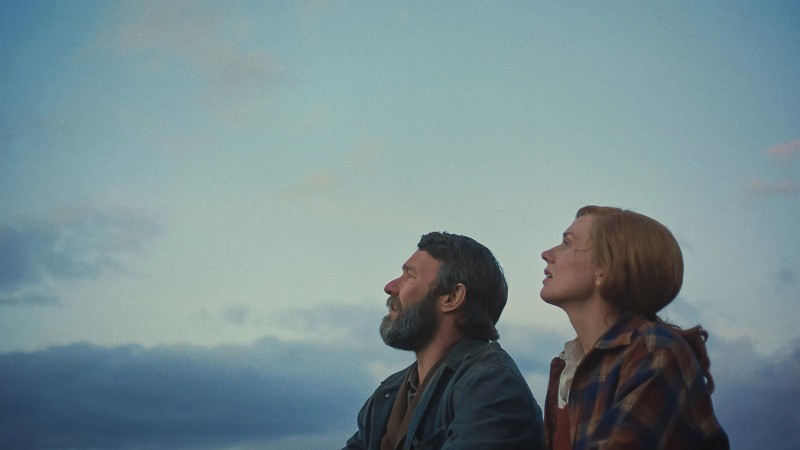
The Mastermind, a box set of four booklets just out from MUBI Editions, documents and reflects on the making of Kelly Reichardt’s film. In a brief excerpt up at IndieWire, Lucy Sante writes about The Mastermind as an homage to the films of the 1970s, “especially those odes to cutting loose and hitting the road: Five Easy Pieces (Bob Rafelson, 1970), Two-Lane Blacktop (Monte Hellman, 1971), Vanishing Point (Richard C. Sarafian, 1971), with their urgent indeterminacy. It’s a landscape she also associates with the early-’70s road-trip photos by Stephen Shore.”
Alejandro Jodorowsky will turn ninety-seven next month, and working with Donatien Grau, an editor and head of contemporary programs at the Louvre, he’s just completed the two-volume monograph Art Sin Fin, which “serves as an archive, a repository, a bulging bestiary of counter-cultural weirdness,” as Xan Brooks writes in his profile of Jodorowsky for the Guardian. “Naturally, Art Sin Fin covers Jodorowsky’s brief ’70s reign as the ‘king of the midnight movie,’ the creator of the head-scrambling cult classics El Topo and The Holy Mountain, beloved by Dennis Hopper and John Lennon alike. But the retrospective roams much farther afield, leading us through riotous stage shows, outlandish comic-book panels, and designs for grand productions (such as his long-cherished adaptation of Dune) that never saw the light of day.”
Transporting Novels
Crucible, the new novel from John Sayles, is set in Detroit during the Great Depression, and it’s “about the pervasive culture of Fordism and the monstrously outsized impact the so-called ‘People’s Tycoon’ Henry Ford had on the lives of people in Detroit, whether they worked for him or not,” writes Steve Nathans-Kelly, introducing his interview with Sayles for the Chicago Review of Books. Crucible “features a rich and memorable cast of characters both imagined and real, famous and forgotten, and intimately captured in innumerable vivid vignettes.”
In an exchange with Scott Heller in the New York Times, Sayles notes that he’s “already got another novel written and ready to go.” As for another film, “I think it’s unlikely. Unlike writing fiction, moviemaking requires a good deal of fundraising first.”
Heller has also been in touch with Tilda Swinton, the subject of the exhibition Ongoing, on view at the Eye Filmmuseum in Amsterdam through February 8. The catalog features contributions from Olivia Laing, Joanna Hogg, Apichatpong Weerasethakul, Jim Jarmusch, and Pedro Almodóvar. Heller asks the star of Sally Potter’s Orlando (1992) if she’s since revisited Virginia Woolf’s 1928 novel. “I read it about once every four or five years,” says Swinton. “To check my evolution against it. It’s a magic mirror of a book, which I first tucked under my pillow when I was fifteen and which, somehow, reliably keeps reflecting back each phase of life at me, leaf by leaf.”
Stark House has recently reissued Build My Gallows High, the 1946 novel by Daniel Mainwaring (writing as Geoffrey Homes) that Mainwaring adapted—with uncredited revisions by Frank Fenton and James M. Cain—as Out of the Past, the classic 1947 noir directed by Jacques Tourneur and starring Robert Mitchum. “It was a sour experience for Mainwaring,” writes Jeremy Carr for Film International, “seeing others dabble in the material he originated, but to overly credit Fenton, or Cain, with the crackling dialogue (and Out of the Past indeed has some of the best) is to take away Mainwaring’s own capacity for biting, brilliantly executed banter and description, of which the novel is overflowing.”
Philosophical Bents
For Films in Frame, Pierre Jendrysiak looks back on last year’s events and screenings in Paris marking the hundredth anniversary of the birth of Gilles Deleuze. “Perhaps now is the right moment to return to Cinema 1: The Movement-Image and Cinema 2: The Time-Image from the vantage point of the present,” writes Jendrysiak, “to rediscover their flashes of insight—stylistic as much as conceptual—which extend the rhizomatic reading already proposed in A Thousand Plateaus. We are equally free to draw on Deleuze’s thinking to uncover other possible links with cinema. His book Proust and Signs (1964), for instance, can serve as a guide to understanding the relationship Luchino Visconti maintained with In Search of Lost Time—a novel he never adapted but which haunted his entire body of work.”
In Death by Laughter: Female Hysteria and Early Cinema, Maggie Hennefeld’s writing, “situated at the intersection of film historiography, comedy studies, and feminist theory, moves fluidly between high theoretical discourse (Michel Foucault, Hélène Cixous, Jacques Lacan) and playful, irreverent rhetoric with exclamation marks and UPPERCASE fonts,” writes B. Geetha in the new issue of Senses of Cinema. “The book invokes Hélène Cixous’s conceptualization of the ‘Laugh of the Medusa’ by deploying as an ‘urtext for a feminist counterpolitics of antipatriarchal enjoyment.’”
Also in the new Senses, Efrén Cuevas notes that in Making History Move: Five Principles of the Historical Film, Kim Nelson “argues that if ‘writing is the bias through which we read history,’ as John Durham Peters suggests, we may surmise that ‘filmmaking is the bias through which we experience it.’” Arindam Sen finds that William Raban’s Nautical Twilight, a personal account of working for more than half a century as an artist filmmaker, is “diaristic, descriptive, reflective, and critical,” and Amber Patrice Sweat suggests that Laura U. Marks’s The Fold: From Your Body to the Cosmos “serves more as a reflection on our infinitely connected everyday lives than it does as a text that centers analyses of aesthetic media.”
Forthcoming
Arriving in March, Michael Glover Smith’s Bob Dylan as Filmmaker: No Time to Think is a study not only of Eat the Document—shot in 1966 by D. A. Pennebaker under Dylan’s direction and released in 1972—and Renaldo and Clara (1978) but also of films in which, as Smith argues, Dylan operates as a sort of “invisible coauthor,” including Larry Charles’s Masked and Anonymous (2003) and Rolling Thunder Revue: A Bob Dylan Story by Martin Scorsese (2019).
Films That Explode Like Grenades: Robert Kramer and the Search for a Radical Cinema will be out in June, and the author, Whitney Strub, has a piece in Metrograph’s Journal on Kramer’s Ice (1970). “Shot like an agitprop documentary in frenzied 16 mm black-and-white and set in a vaguely futuristic New York City that looks exactly like its then-present,” writes Strub, Ice is “exhilarating, exhausting, and as concrete a rendition of the psychic landscape of the New Left in 1969—the year it exploded, often quite literally—as any filmmaker made. It was heavily debated at the time, meeting mixed critical reaction, but time has proved it a foundational work of radical film culture.”
Updates
We took a first look at Abel Ferrara’s memoir Scene back in November, and the director has most recently been talking to Hagop Kourounian (Director Fits) and Alex Vadukul (New York Times) about the book, his appearance in Josh Safdie’s Marty Supreme, living in Rome, and more. As Farran Smith Nehme notes in the Wall Street Journal, Scene “is not one of those memoirs that has fun with the sowing and skirts the reaping.”
“I don’t always find myself agreeing with the critical verdicts of n+1 film critic A. S. Hamrah—Scott to his friends—but Hamrah is perhaps the most compelling voice in contemporary film criticism,” writes Saul Austerlitz at the top of his interview. Reviewing Hamrah’s Last Week in End Times Cinema,Will Sloan suggests that “one turns to Hamrah, I think, primarily to see him deflate the hacks and know-nothings. Even his positive reviews are undergirded with contempt for the corrupt cultural landscape that has made anything good such an outlier.”
Hamrah has most recently been talking about Last Week and Algorithm of the Night: Film Writing, 2019–2025 with Abby Kluchin and Patrick Blanchfield, hosts of the Ordinary Unhappiness podcast; Marc Weingarten in the Los Angeles Times; and Nick Pinkerton, editor-at-large of Metrograph Journal. On Thursday, Hamrah will be at the Brattle in Cambridge, Massachusetts, to present Richard Linklater’s Nouvelle Vague (2025) and Joel Potrykus’s Vulcanizadora (2024), and on Saturday, he’ll introduce two films at Metrograph, George A. Romero’s Land of the Dead (2005) and Billy Wilder’s Ace in the Hole (1951).
For the Los Angeles Review of Books, Conor Williams talks with Melissa Anderson, whose “criticism has a wonderful and lively clarity, and for a rightfully esteemed intellectual, she has a real sense of humor. With The Hunger: Film Writing, 2012–2024, Anderson has compiled her work, previously published in 4Columns, the Village Voice, and Artforum, under headings including ‘The Homosexual Agenda and Trans Missions’ and ‘Cinema, Industrial-Size and Smaller (with a focus on heterosexual depravity).’”
Reverse Shot is running Jordan Cronk’s conversation with J. Hoberman about Everything Is Now: The 1960s New York Avant-Garde—Primal Happenings, Underground Movies, Radical Pop, in which, as Hoberman puts it, “the city is the protagonist.” A presence throughout the book, though, is Jonas Mekas, who “comes out of nowhere. He’s living in poverty with his brother and makes all this happen. I saw him as a kind of local hero. The same thing is true of Warhol and Dylan. They’re provincial guys who show up in New York and kind of conquer the city. And that’s part of it, how the city, in its indifference, could make possible these tremendous forms of ambition.”
For It’s Nice That, Sudi Jama talks with photographer Agata Grzybowska, who has covered wars in Syria and Ukraine and was invited by Chloé Zhao to the set of Hamnet. “She wanted me to photograph the unseen, the unconscious, and this is something I am also very dedicated to,” Grzybowska tells Jama, who notes: “New stories formed, footed in both the real and the imagined.” Even as a Shadow, Even as a Dream combines Grzybowska’s photos with writing by Jesse Buckley.
In Olivia Laing’s second novel, The Silver Book, Danilo Donati, the real-life costume and production designer, strikes up an affair with Nicholas, a red-haired Englishman Laing has dreamed up. It’s 1974, and Donati is working on Fellini’s Casanova (1976) and Pier Paolo Pasolini’s Salò, or The 120 Days of Sodom (1975) at the same time, and Maria Callas, Donald Sutherland, and Elizabeth Taylor all make brief appearances.
“But the undisputed star of Laing’s novel is Pasolini,” writes Tim Pfaff in the Bay Area Reporter. “The author finds economical ways to signal the important aspects of his career, his staunch anti-fascist politics, and his love of young men. But Pasolini the man is Laing’s real interest, and she gives us an insight into his strict working methods, his fundamentally gentle character, and the floridity of his homosexuality.”
For Peter Walsh at the Arts Fuse, “Laing’s writing style suggests to me the literary tone of the mid-’70s, which formed a bridge between the strict, minimalist realist styles of earlier in the century (think Hemingway and Fitzgerald) and the maximalist, postmodern tastes that were then emerging (think Pynchon and Barthelme).”
Endnotes
John Bleasdale’s recent guests on his Writers on Film podcast include Justin John Doherty (Don’t Look Now and Then), Nat Segaloff (Hurricane Billy: The Stormy Life and Films of William Friedkin), and Laura Venning (Icons of Cinema: Greta Gerwig).
Among the authors talking on New Books Network in the past few weeks are Stuart Klawans (Crooked, but Never Common: The Films of Preston Sturges), Robert P. Kolker and Nathan Abrams (Kubrick: An Odyssey), J. W. Rinzler and Lee Unkrich (Stanley Kubrick’s The Shining), Jason Isralowitz (Nothing to Fear: Alfred Hitchcock and the Wrong Men), Matthew Kennedy (On Elizabeth Taylor: An Opinionated Guide), Min Joo Lee (Finding Mr. Perfect: K-Drama, Pop Culture, Romance, and Race), and two contributors to the BFI Film Classics series, Eric G. Wilson (Point Blank) and Michael Newton (It’s a Wonderful Life).
John Wyver, the author of Magic Rays of Light: The Early Years of Television in Britain, has curated a season for the BFI to mark one hundred years since “the January evening in 1926 when [Scottish inventor John Logie] Baird gave the first public presentation of what he called ‘true television,’” as Wyver puts it at his site, Illuminations. And to wrap, let’s note that the collection Film Studios in Britain, France, Germany, and Italy: Architecture, Innovation, Labour, Politics, 1930–60 is currently available as a free download from Bloomsbury.
Don’t miss out on your Daily briefing! Subscribe to the RSS feed.