Exiles and Homecomings
The San Francisco Silent Film Festival will return to the Castro Theatre next May, and in the meantime, this year’s edition is running through the weekend at the Orinda Theatre, an Art Deco movie palace that first opened in the East Bay in 1941. Every screening is accompanied by live music—“a silent screening is a concert and a film in one,” notes Jonathan Marlow at Hammer to Nail—and the best guide to the program featuring such immortals as Lon Chaney and Buster Keaton is Dennis Harvey’s overview at 48 Hills.
Sally Kirkland, who made her film debut in Andy Warhol’s The 13 Most Beautiful Women (1964), also died on Tuesday. She was eighty-four. Having started out in off-Broadway productions, Kirkland went on to appear in The Sting (1973), The Way We Were (1973), A Star Is Born (1976), Private Benjamin (1980), Neil Young’s Human Highway (1982), and Amy Holden Jones’s Love Letters (1984) before landing the title role that would score her an Oscar nomination.
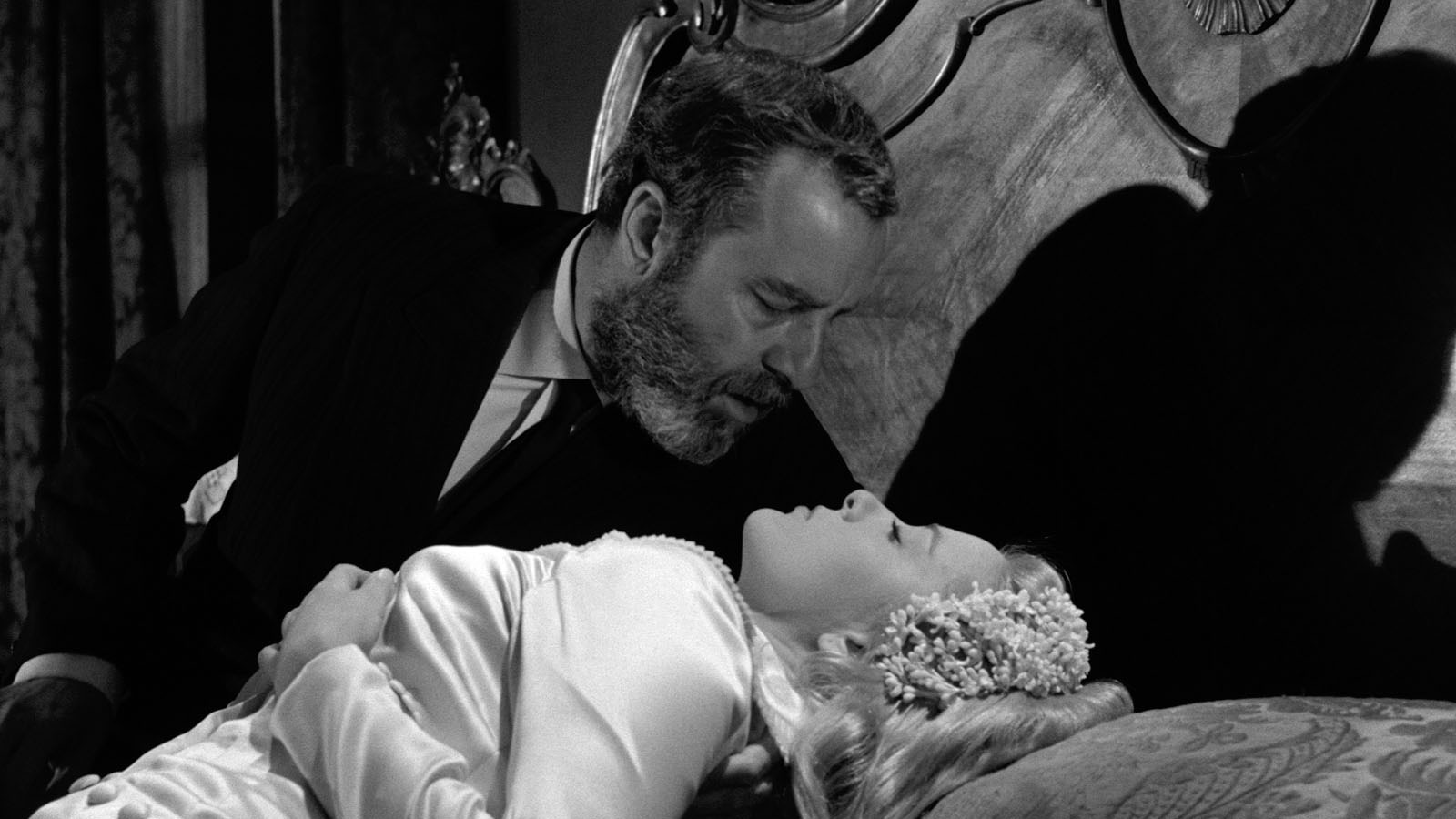
- “Not just a great movie, Luis Buñuel’s Viridiana [1961] was also a masterful prank,” writes J. Hoberman in the New York Times. General Franco had invited Buñuel to make a film in his native Spain for the first time since his exile in the 1930s, and naturally, the filmmaker obliged with a Palme d’Or–winner that the Vatican condemned as “sacrilegious and blasphemous.” A novice nun (Silvia Pinal) finds herself trapped on the estate of her uncle (Fernando Rey), “a dapper fetishist whose desires seem to reopen Buñuel’s dialogue with Alfred Hitchcock,” writes Hoberman. “As Buñuel’s Él [1953] anticipated the climax of Vertigo, so Viridiana restages a key scene from Vertigo with Viridiana inveigled to dress up in her aunt’s wedding dress.”
- A new restoration of Viridiana will open at New York’s Film Forum on Friday, and on the following Tuesday, Él will be out on 4K and Blu-ray. The story of an attractive young woman (Delia Garcés) who marries a sophisticated gentleman (Arturo de Córdova) only to later discover the deranged pathology of his paranoia, Él is “a hateful, horny, feminist anti-romance—and a favorite of filmmaker Guillermo del Toro—that spits in the face of ‘love at first sight,’” writes Jacob Oller at the A.V. Club. “The manipulative seesaw of love bombing and devaluation, of jealousy and entitlement, are wrapped up in society-wide twentieth-century machismo—and yet, its bullheadedly doubting authority figures wouldn’t be out of place in an indie romance-gone-wrong from this year.”
- Monday will mark the hundredth anniversary of the birth of Rock Hudson, a centenary that happens to coincide with Too Much: Melodrama on Film, a series running at BFI Southbank and other cinemas throughout the UK over the next several weeks. In Douglas Sirk’s Magnificent Obsession (1954), Hudson’s Bob Merrick, a playboy, “(effectively) kills a woman’s husband, blinds her, and yet we are still rooting for him and her to end up together at the end,” writes Chloe Walker for the BFI. “It should have been an impossible feat for an actor to pull off. It’s a credit to both Sirk’s canny use of his muse, and Hudson’s warmth and earnestness as a performer, that the impossible doesn’t even feel effortful.”
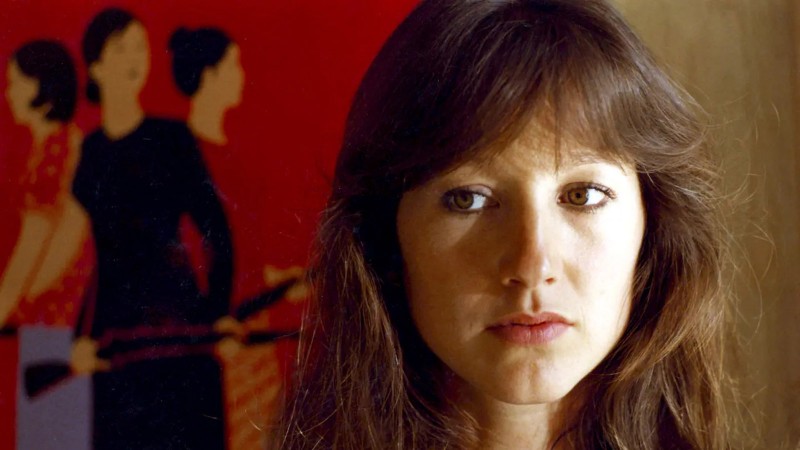
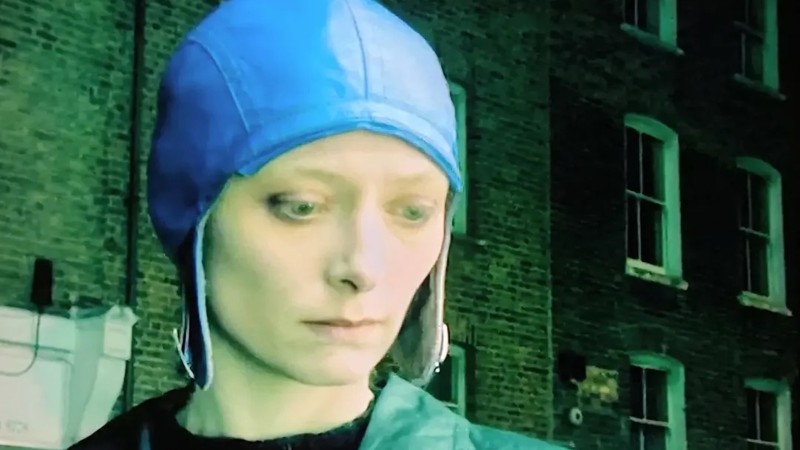
- Alt Divas is a Metrograph series spotlighting Asia Argento, Beatrice Dalle, and Yekaterina Golubeva. Writing for the Journal, Beatrice Loayza focuses on Golubeva, the Russian actor who broke through in Three Days (1991), the debut feature from her second husband, Šarūnas Bartas. The film “premiered at the Berlinale to great success—her melancholic sensibility meshing organically with his sparse, Tarkovskian cinema—and likely motivated Golubeva’s migration to Paris. There, she landed on the radars of arthouse heavyweights like [Claire] Denis and Bruno Dumont. Leos Carax, her partner up until her death in 2011, has stated that, upon merely seeing Golubeva’s face on-screen one day for ten seconds, he was instantly captivated.” Carax cast her as the female lead in Pola X (1999). For Loayza, Golubeva’s “haunted visage and Slavic background anchored her persona to the unravelling of twentieth-century history with its cruel narratives of exile and dislocation.”
- On October 30, Paul Schrader’s Mishima: A Life in Four Chapters (1985) was publicly screened for the first time in Japan. As Rebecca L. Davis explains in the NYT, Japanese ultranationalists objected to the very idea of an American team dramatizing the life of one of their own, novelist Yukio Mishima, and the financiers, Toho-Towa and Fuji Television, reached a tacit agreement with Schrader. He could make his movie in Japan but never show it there. “I was making a film that nobody was financing and no one was going to see,” Schrader tells Davis. “It was strangely intimidating, because it was so liberating.” Working with production designer Eiko Ishioka, he “jumped off the cliff, stylistically.” The day before the Japanese premiere, Schrader told Nick Newman at the Film Stage that Affliction (1997) and First Reformed (2017) “are probably the most complete, solid films I’ve made, and Light Sleeper [1992] is probably the most personal to me. But Mishima has a place just because it is so outrageous. I still can’t believe it got made and I still can’t believe that I made it.”