

Isle of Dogs: Stray Dogs and Show Dogs
Share
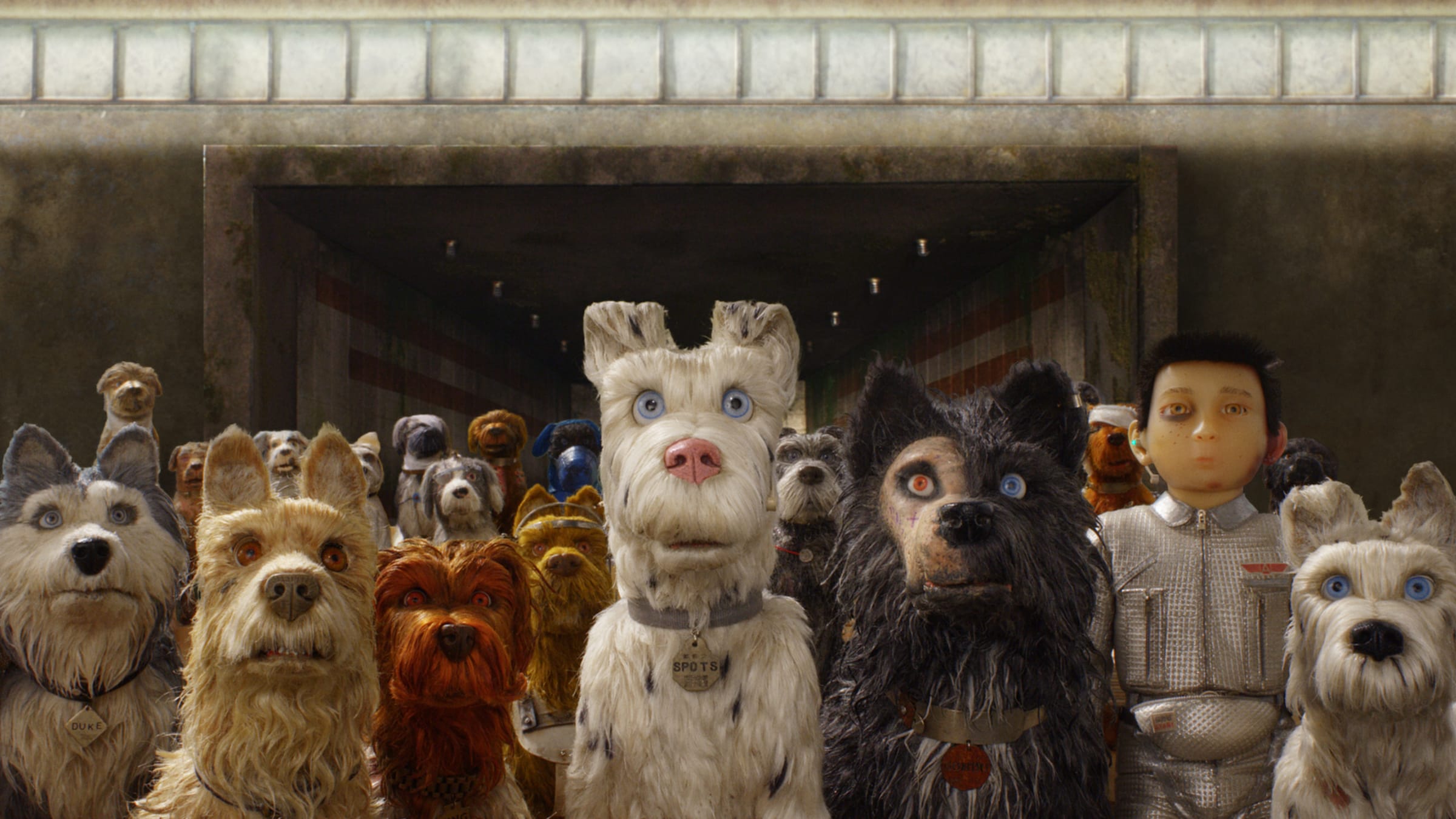
In an early scene in Isle of Dogs (2018), a stray dog, Chief (voiced by Bryan Cranston), and a silky pet dog, Nutmeg (voiced by Scarlett Johansson), meet on an island of trash. Chief laps at a bucket of tepid water, and sees Nutmeg peering at him from above. Chief—matted, with one black eye—asks Nutmeg if she’s a show dog. “I was bred as a show dog, I was groomed for that purpose, it wasn’t my choice, I don’t consider it my identity,” she says, caustically. “Anyway, look around. What difference does it make now?” “So that’s a yes,” Chief says. “That’s a yes,” Nutmeg responds. “I used to be.” The show dog happens upon the stray, and so director Wes Anderson’s two most enduring types meet: the disheveled loner who will bow to no master, and the sad golden beauty whose skills no longer have traction in the world.
“I used to be”: in Anderson’s films, the stray—the migrant, the orphan—is taken in by someone with pedigree, who walks through the world with a fading grandeur. This scenario takes many forms: the boy who falls for a teacher, whose own great love has died, in Rushmore (1998); the neighborhood kid, Eli, who has always wanted to join the eccentric title family of The Royal Tenenbaums (2001); the refugee without papers, Zero, who is taken in by a hotel concierge, M. Gustave, in The Grand Budapest Hotel (2014). The presence of these figures—the stray and the show dog, the bright-eyed “zero” and the melancholy has-been—accounts for the vibrancy of stillness in Anderson’s films. These forces also shape the form of Anderson’s films, which encompass both a childish restlessness that dashes through scenes in a series of tableaux—we often get a montage in which we happen upon frozen characters as though they are miniatures in a dollhouse, and then another—and a counterdrive, one that tries to make time stand still through mannered play, to hold aloft an elegance that has already been expelled.
It goes without saying that both the stray and the show dog are lost in their own ways, and that, by coming together, they find a purpose. In Isle of Dogs, Anderson’s second stop-motion feature, we begin in a fictional Japanese metropolis, Megasaki, which, after an outbreak of canine flu, has banished all of its dogs to Trash Island. There, Chief leads a gang of former pets who survive on rotten scraps. One day, they see a plane crash on their island. The pilot, a Japanese boy named Atari—the nephew of Megasaki’s Mayor Kobayashi—is looking for his pet Spots, who was the first dog exiled to Trash Island, the “zero” candidate. Atari meets Chief, and, subtly, the search for a lost dog becomes a narrative about whether the two can fully acknowledge each other, whether Chief can accept Atari, even though Chief insists that he wants no master. Anderson’s films are always about the stakes of acknowledgment: either being taken in—the loner letting go of a self, to mold into a domestic family—or being cast out, where you insist on an idea of a self, even though doing so may involve great danger.
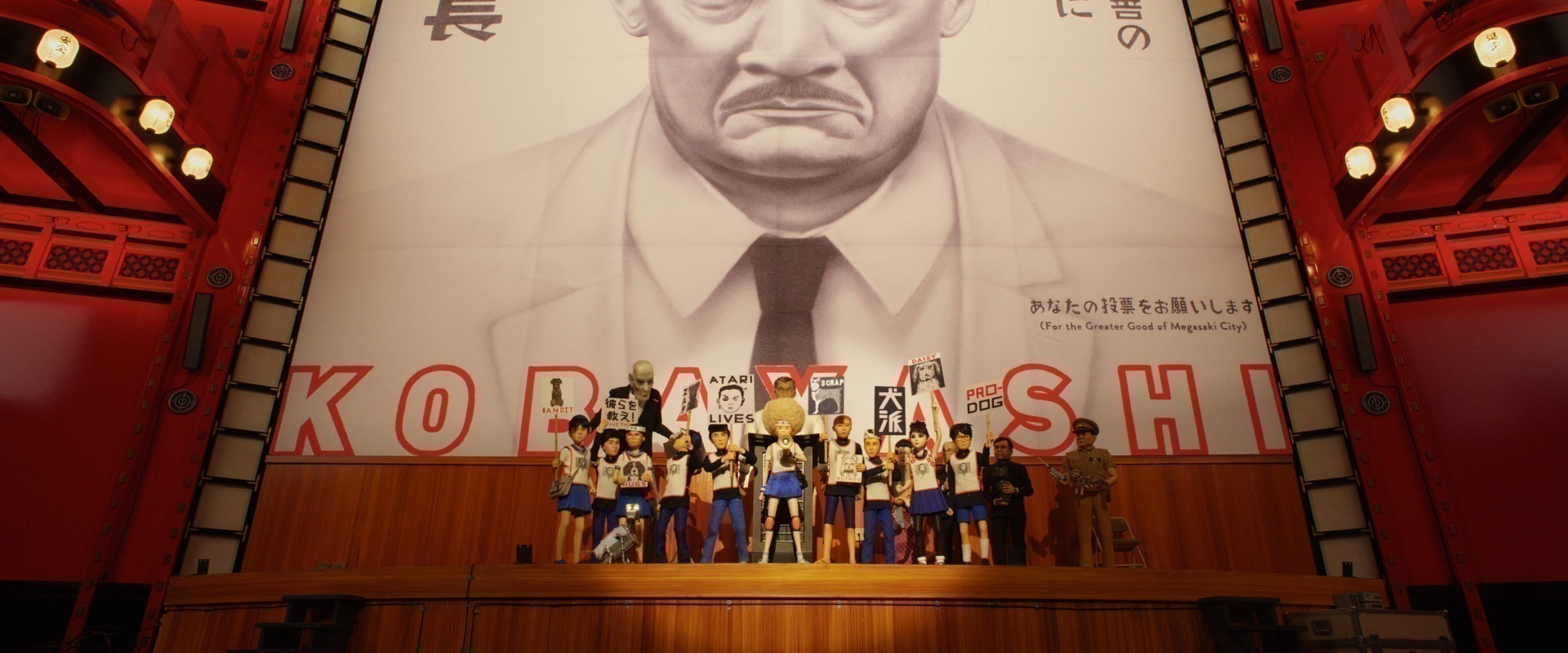
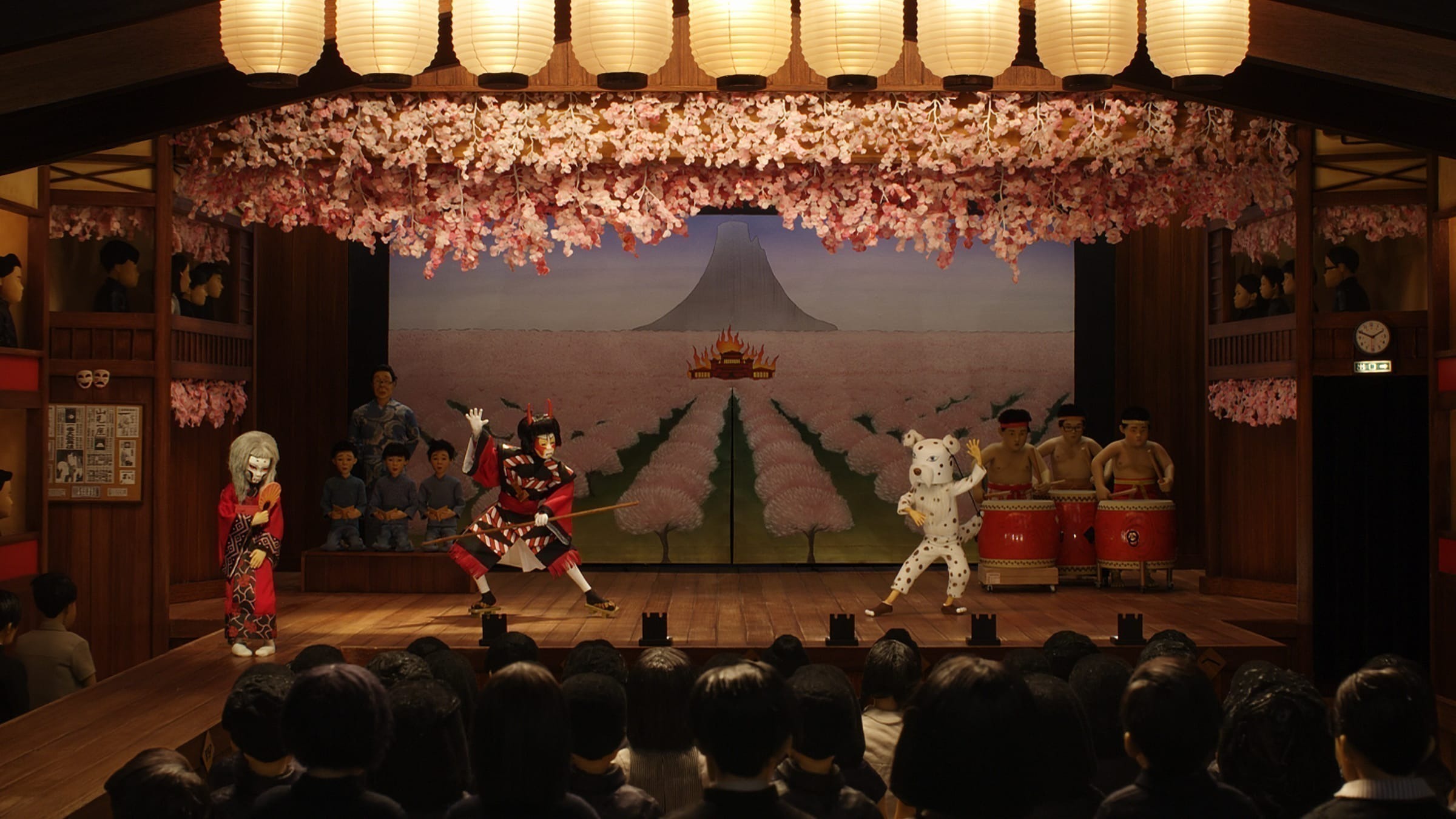
In a 1999 New York Times article about the growing arms capabilities of North Korea, a Japanese college student uses a familiar pet analogy to argue for a stronger Japanese military force: “Japan is America’s dog. We do anything they tell us, but in the end, they won’t take care of us.” For all of Isle of Dogs’ lightheartedness, its playful adaptations of Japanese artwork—puppies riding Hokusai’s wave! canines in Hiroshige’s floating worlds!—it does not shy away from depicting the legacy of the economy of “care” and “comfort” that is part and parcel of the story of both Japanese and American imperialism. And lest we consider Japan merely a victim of American occupation, the very geopolitical situation that the student is talking about is, of course, in part caused by the systems of care, comfort, and violent assimilation that Japan put in place in colonial Korea and Taiwan in the early twentieth century.
Yet, instead of dismissing ideas about care and comfort wholesale, Isle of Dogs considers them in another sense, looking at such gestures—the comforting of a child, the warm palm of support to those in mourning—and attending to their costs, their transformations. The film ends with Nutmeg asking Chief—who once refused the concept of master but now calls Atari “Master Atari” a month after their adventures—what it feels like to be “a former stray.” He chuckles, looks wistfully into the distance, and says he takes it one day at a time.
More: Essays
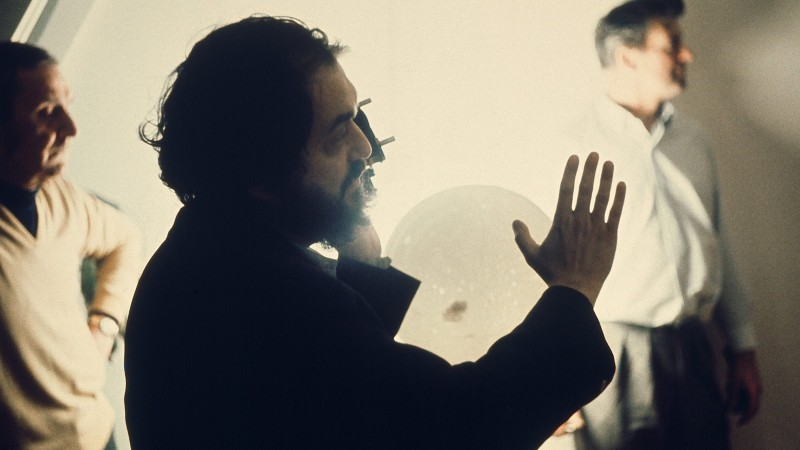
God Laughs: Stanley Kubrick’s Cinema
Throughout his enormously influential body of work, the great director explored the conflict between humankind’s obsession with control and our capacity for error and failure.
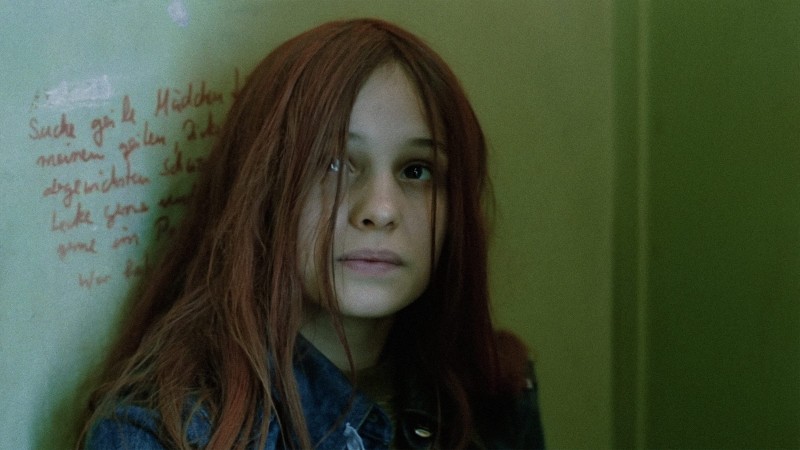
Christiane F.: Up Against the Wall
Uli Edel’s harrowing tale of youth rebellion is one of cinema’s greatest Berlin films, a visceral urban portrait that captures the city’s doom and decadence during the Cold War era.
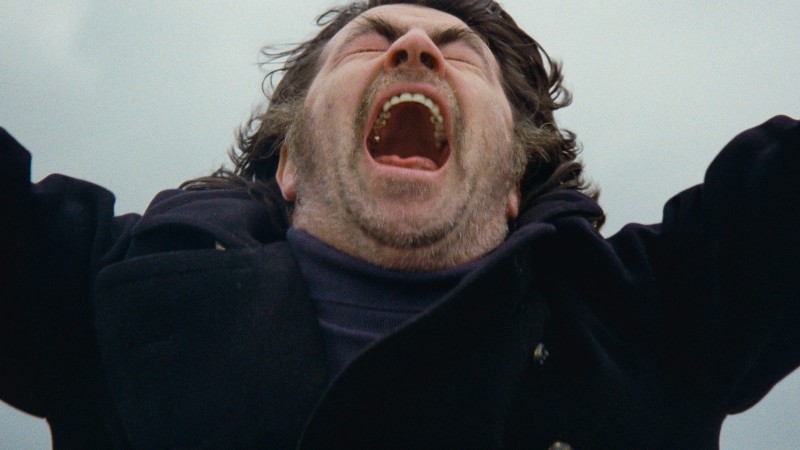
The Shout: Sound and Fury
Blending elements of psychological thriller, social satire, and psychedelic film, Jerzy Skolimowski’s Cannes-award-winning classic uses its audacious sound design to evoke the terror of English civilization.

Welcome II the Terrordome: The Future Is Furious
A dystopian drama that draws on the influences of African mythology and hip-hop, Ngozi Onwurah’s debut feature uses a mix of speculative forms to expose anti-Blackness as a system that underpins the modern world.