A Confucian Confusion and Mahjong: State of Transaction
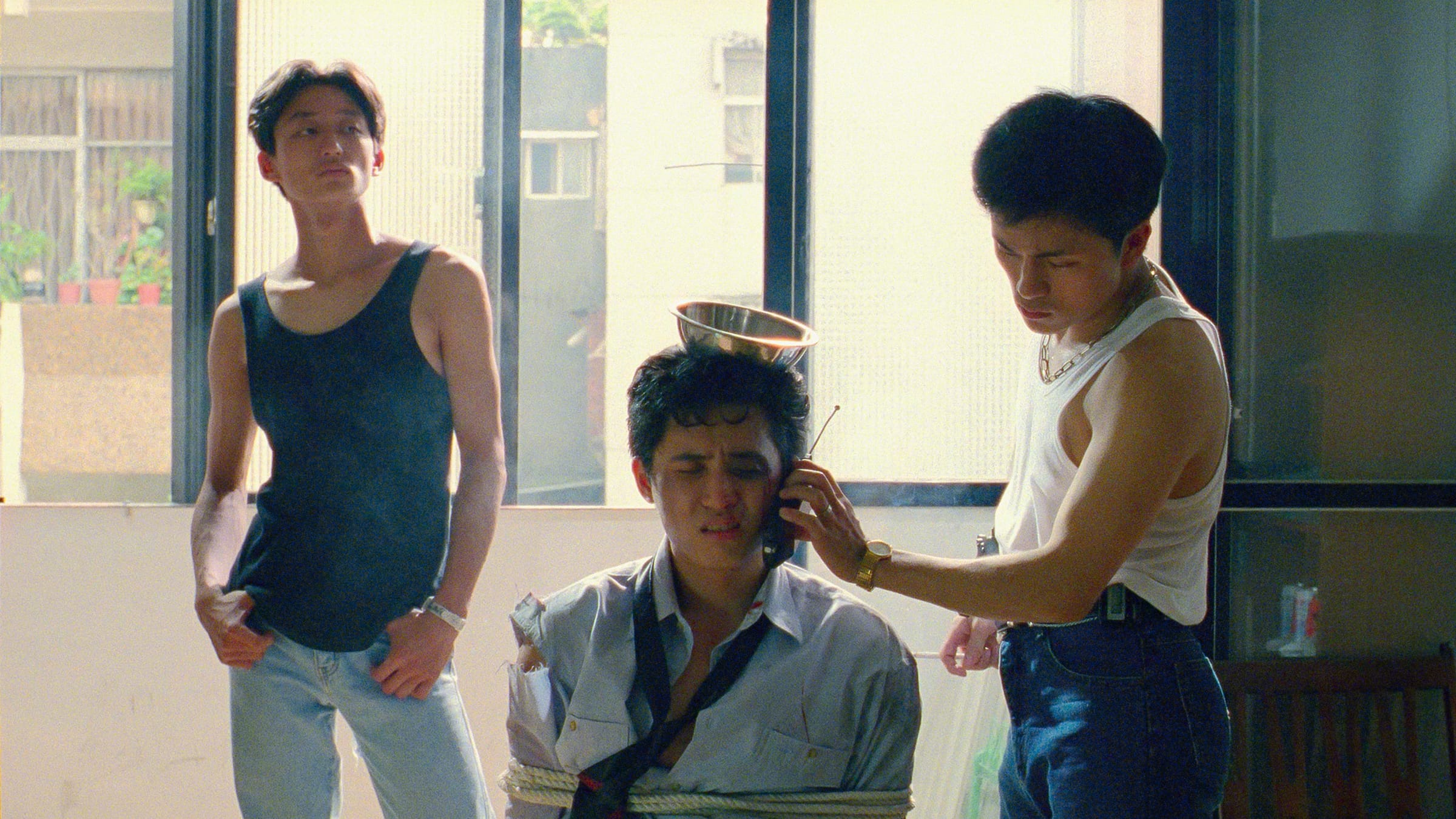
Some filmmakers have a skill for bringing the past to life, others for imagining the future. Edward Yang was a master of seeing the present. It can be hard to make out the shape of things as they form before us, but with his analytical mind, his intuitive grasp of social context, and his unerring sensitivity to the workings of inner life, the great Taiwanese director seemed to understand in real time how world-historical shifts were rewiring the human psyche, before most others had even found the vocabulary to describe what was happening. Yang died in 2007, at the too-young age of fifty-nine, and the loss still feels profound, not least because a moment like ours—muddled, cluttered, prone to mendacity and obfuscation—could so badly use his cutting lucidity. An artist for complex times if ever there was one, he was capable of diagnosing their ills and appreciating their absurdities, and this was never more evident than in his fifth and sixth features, A Confucian Confusion (1994) and Mahjong (1996).
How should we think of the 1990s? The decade that followed the so-called end of history also marked the centenary of cinema and sowed many of the seeds of our present dysfunction. Taiwan provided a front-row seat to one of the period’s most distinctive features: the seductive and pernicious spread of global capital. The island nation was at the time navigating a transition from authoritarian rule—1987 marked the end of almost four decades of martial law—to neoliberal democracy. Yang recognized that the attendant influx of money was transforming everything from Taiwan’s position in the world, not least its tricky triangulation with China and the United States, to its people’s core values and identity. Born in Shanghai, raised in Taipei, and naturalized as an American citizen after spending much of his adulthood in the U.S., where he studied and worked in computer systems, Yang brought an effortless cross-cultural literacy, along with a healthy skepticism, to his dispatches from a fast-changing, increasingly cosmopolitan Taiwan. He once claimed that the country’s decades of political repression were not necessarily worse than its boom years, observing that “one can hide a lot of things under democracy.” With A Confucian Confusion and Mahjong—both of which are attuned to the visible and the intangible manifestations of the nominally free, relentlessly free-market nineties—Yang sought to uncover what was hidden, often in plain sight, looking past the shiny Taipei skyline to the fault lines beneath the surface.
If these two films have been somewhat neglected in assessments of Yang’s oeuvre, it is in part because they are chronologically bookended by A Brighter Summer Day (1991) and Yi Yi (2000). The former is a richly detailed, autobiographically inflected epic of adolescence, expansive in its historical sweep and redolent with sense memories; the latter, which turned out to be Yang’s swan song, is a multigenerational drama that seems to contain all of human feeling, a magisterial work of hard-won wisdom and deeply moving equipoise. The two movies that he made between these magnum opuses evince many of the opposite qualities. Instead of gravity and scope, they aim for fleetness and compression. Both are briskly plotted and densely populated ensemble pieces, unfolding over a few eventful days and nights. They are also often typified—and sometimes dismissed—as comedies, although that simple descriptor understates the ease with which they combine tones and switch registers, deploying genre stylization and sardonic wit in the service of ideas that come thick and fast.
Befitting its title, A Confucian Confusion introduces, in rapid succession, more characters than we can easily track. Their relationships are initially unclear, though we soon realize that these dynamics are always fluctuating, as one person’s value relative to another rises or dips like a stock-market ticker. Unafraid of big themes, Yang gravitated to the clash of large forces, to eternal binaries that could illuminate particular conditions of existence: the push-pull of tradition and modernity in Taipei Story (1985); the vertiginous blurring of fiction and life in The Terrorizers (1986). In A Confucian Confusion, whose characters smudge personal and professional distinctions into oblivion, he trains his sights on the queasy bedfellows of art and commerce.
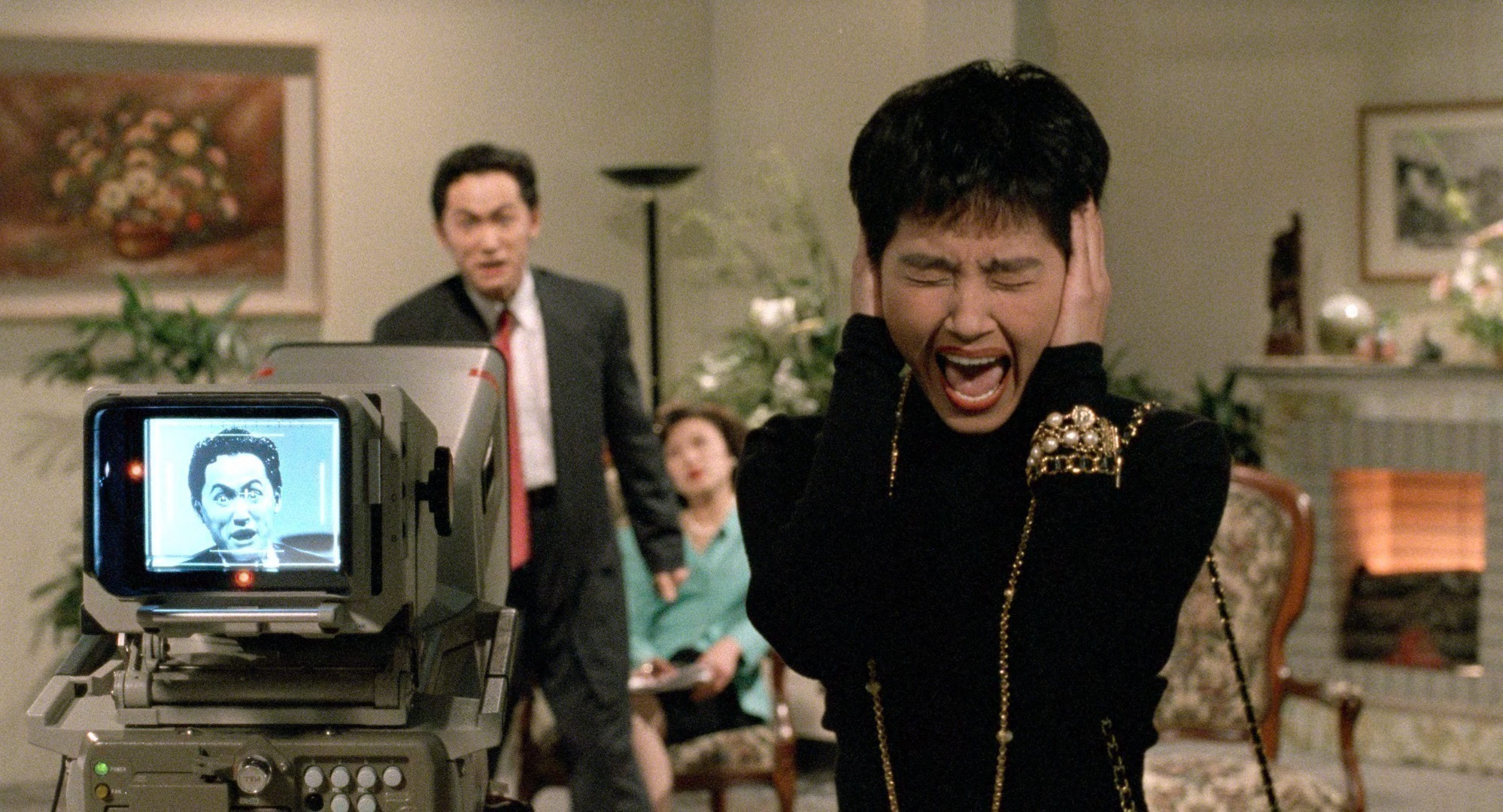
The hub of the action is a Taipei creative agency, run by the coolly imperious Molly (Joyce Ni) and bankrolled by her feckless man-child fiancé, Akeem (Wang Bosen). While Molly engages in a perpetual backroom game of manipulation and rumormongering, the business of running the firm—which churns out pablum like commercials, soap operas, and a bromide-choked talk show hosted by Molly’s sister (Chen Li-mei)—falls to her loyal lieutenant, Qiqi (Chen Shiang-chyi), whose boyfriend, a government bureaucrat named Ming (Wang Wei-ming), resents Molly’s outsize presence in their lives. The intrigue escalates when Molly abruptly decides to terminate one of her employees, Feng (Richie Li)—or, rather, orders Qiqi to do it—because she senses (correctly) that the new hire, an aspiring actress, is sleeping with Akeem’s slippery henchman, Larry (Danny Deng).
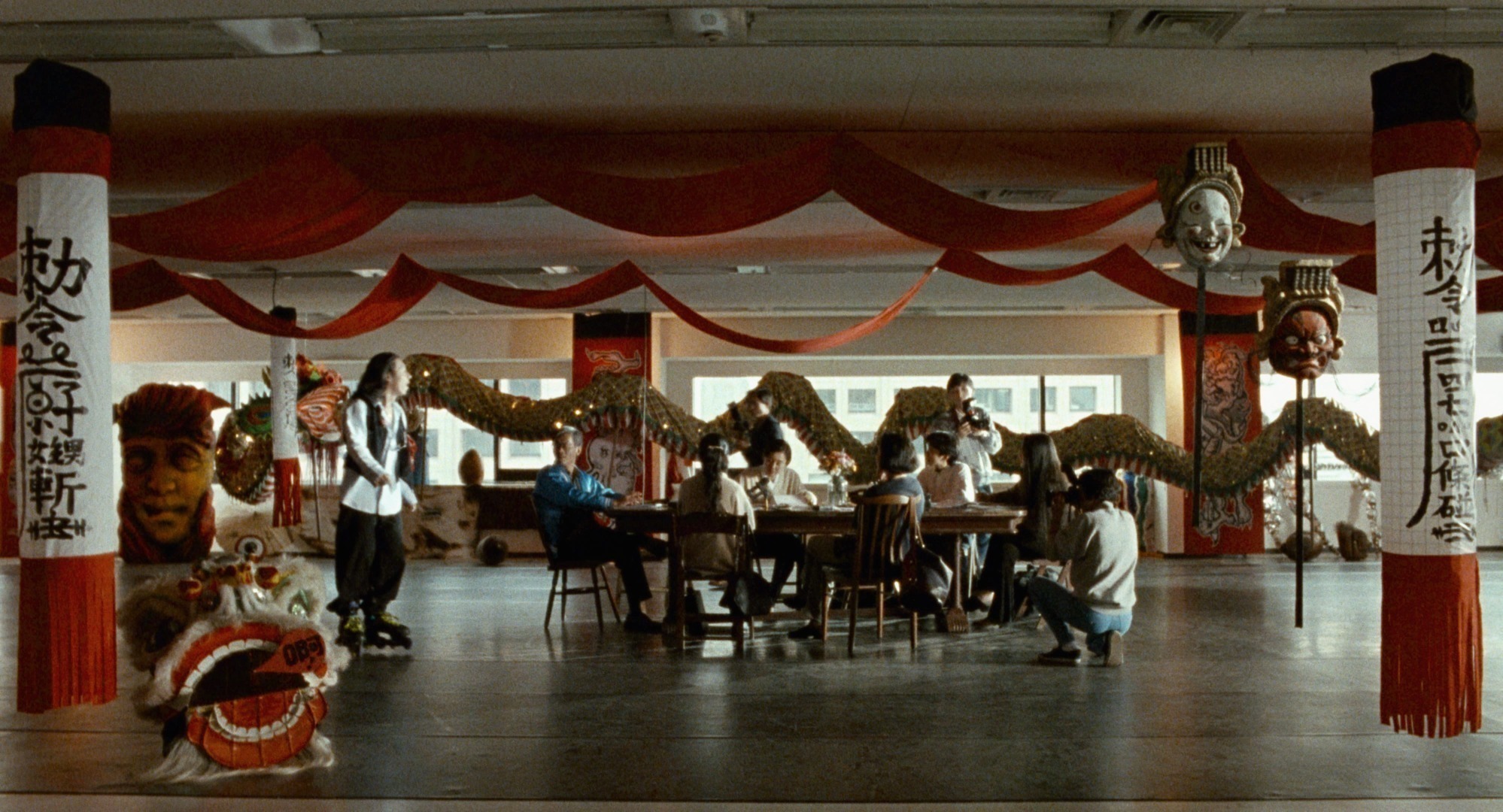
Orbiting this carousel of characters are two artists, both negotiating career crossroads. Playwright Birdy (Wang Ye-ming)—introduced in the opening scene on Rollerblades, skating literal circles around a roomful of journalists—announces a newfound belief in populism: in a flattened utopia where “everyone thinks alike,” an artist should serve the democracy of the box office (“buying a ticket is like voting”). Birdy is defending a plagiarism charge, having purportedly lifted ideas from a novelist (Hung Hung) who is also the estranged husband of Molly’s sister. The novelist’s trajectory is the opposite of the playwright’s: once a best-selling romance author, idolized by teenage girls, he has turned to spartan seclusion and glum philosophizing, and is hawking an unpublishable manuscript about the reincarnation of Confucius, who arrives in the present day to find himself celebrated as a con artist par excellence (no prizes for guessing what it’s called).
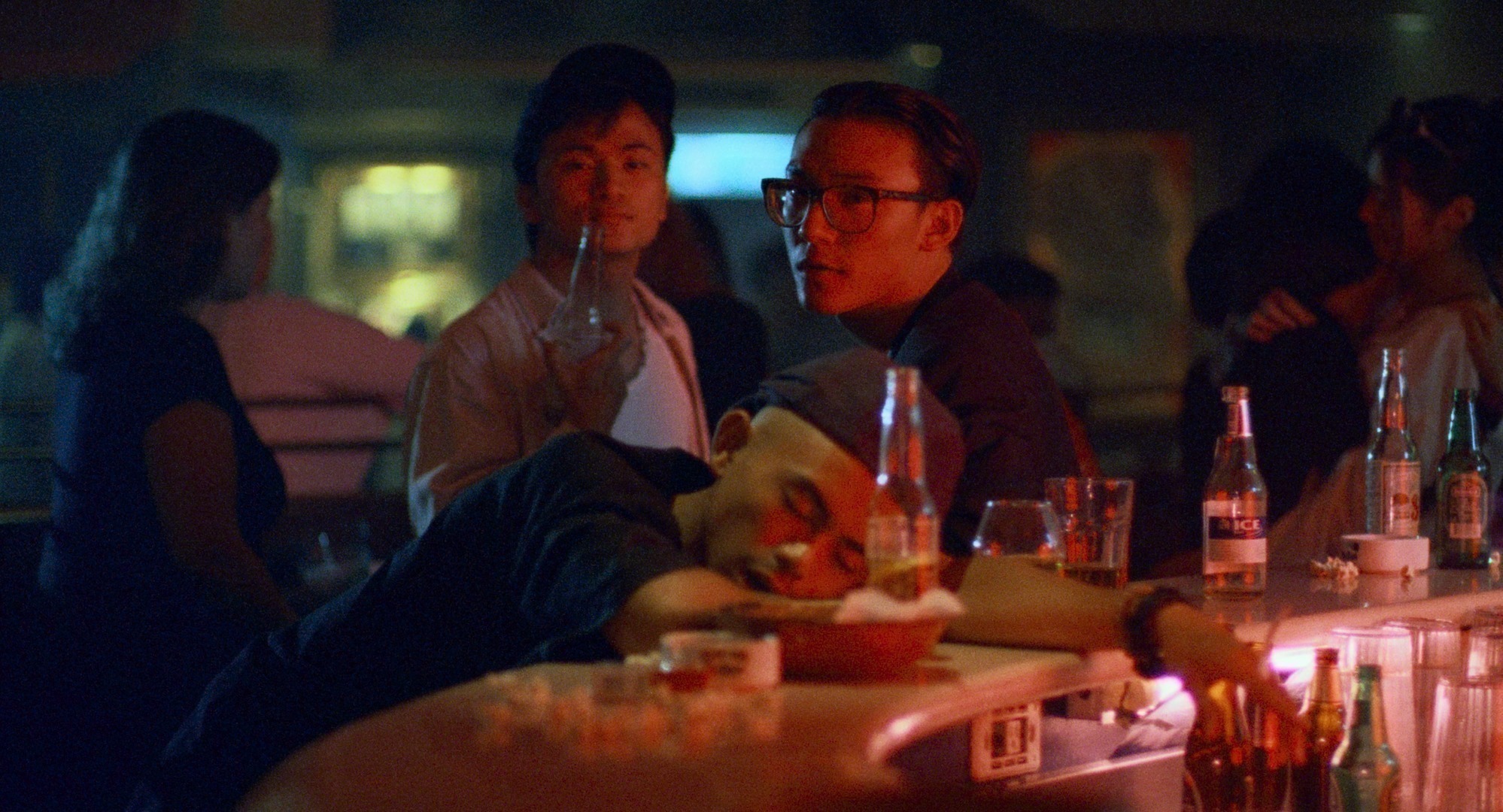
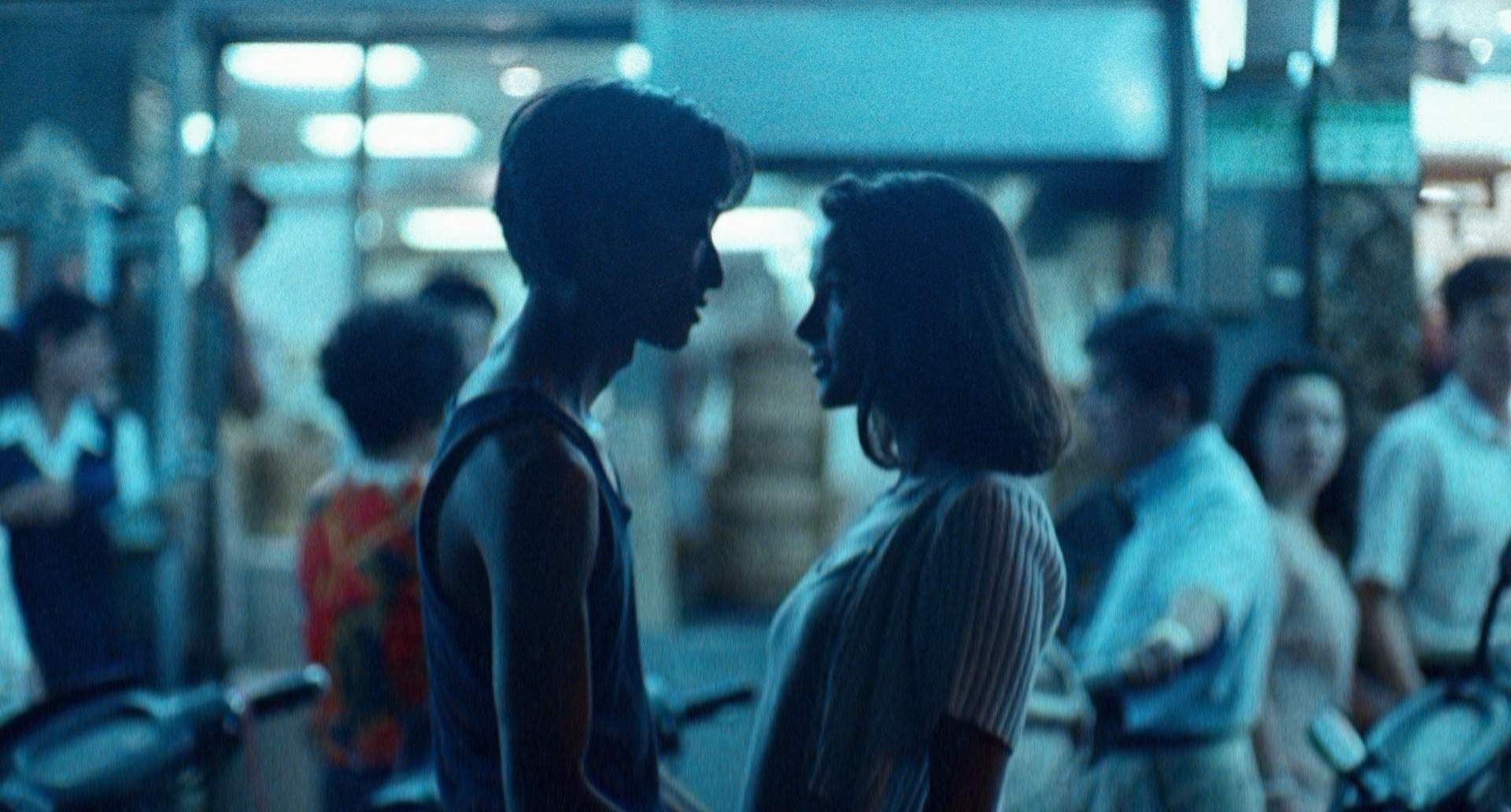
A mantra circulates through Mahjong like a virus: “No one knows what they really want. Everyone’s waiting to be told what to do.” This is a motto to live by for Red Fish, learned from his father and dutifully parroted; versions of it are voiced by others, internalized as a credo for an age of mindless consumerism. The economic calculus is such that human relationships are not merely transactional, as they are in A Confucian Confusion, but outright predatory; anyone is liable to be employed as a pawn, treated as property. In the most egregious instance, Alison spends the night with Hong Kong, and the morning after, in compliance with the gang’s policy of sharing their spoils, is coerced into sleeping with the others (albeit with no kissing, which the guys consider bad luck). The tables are turned later when Hong Kong targets and seduces Angela, an older woman whom Red Fish thinks responsible for his father’s downfall, only for her to invite her girlfriends over to sample her new plaything.
As in A Confucian Confusion, Yang is engaged in a kind of formal and affective challenge—setting up obstacles to emotion and then working to overcome them—and the degree of difficulty is perhaps higher in Mahjong, given the abundance of contemptible conduct. He finds a way to a grace note of an ending, with Luen-Luen and Marthe—the film’s least compromised characters—kissing on the street (and defying bad luck in the process). But the moments that startle and linger—and that inspire some of Yang’s boldest filmmaking—are the ones that lead us there: Hong Kong’s comeuppance, a double suicide, a murder. After Hong Kong’s humiliation at the hands of Angela and her friends, he breaks down in tears, and his sobs remain audible as Yang cuts to a panoramic view of the Taipei night, sounding a lament for the entire metropolis. It is a grieving Red Fish who commits the murder, in a corner of an empty apartment, strobe lights flashing from an unknown source, the artifice somehow heightening the shock. Again, a scene ends with a young man inconsolable, and this time his wails cede, over a black screen, to gloating laughter. It is Markus, about to launch into a smug voice-over about Taiwan as a modern-day treasure island, ripe for neocolonial plunder: “The nineteenth century was the glorious age of imperialism, right? Just wait till you see the twenty-first century.”
“An artist must reflect reality,” Birdy says in A Confucian Confusion. He tosses this off as a flippant remark, but it’s a mandate that Yang took seriously—and the clarity with which he bore witness to his age helps us even now. Watching A Confucian Confusion and Mahjong from our present vantage, we see a threshold taking shape, new rules of behavior and categories of experience starting to emerge. We see our world coming into being.
More: Essays
God Laughs: Stanley Kubrick’s Cinema
Throughout his enormously influential body of work, the great director explored the conflict between humankind’s obsession with control and our capacity for error and failure.
Christiane F.: Up Against the Wall
Uli Edel’s harrowing tale of youth rebellion is one of cinema’s greatest Berlin films, a visceral urban portrait that captures the city’s doom and decadence during the Cold War era.
The Shout: Sound and Fury
Blending elements of psychological thriller, social satire, and psychedelic film, Jerzy Skolimowski’s Cannes-award-winning classic uses its audacious sound design to evoke the terror of English civilization.
Welcome II the Terrordome: The Future Is Furious
A dystopian drama that draws on the influences of African mythology and hip-hop, Ngozi Onwurah’s debut feature uses a mix of speculative forms to expose anti-Blackness as a system that underpins the modern world.