“This Is About Us”
Share
In Billy Wilder’s Sunset Boulevard (1950), Gloria Swanson’s Norma Desmond screens one of her old silent-era triumphs for William Holden’s Joe. The film is Queen Kelly (1929), starring Swanson and directed by Erich von Stroheim, whose character in Sunset Boulevard, Max, is Norma’s former director, husband, and now, her butler. Queen Kelly became a famously troubled production when Swanson and her financier and lover Joseph P. Kennedy objected to von Stroheim’s extravagant spending and decadent designs on a story of illicit lovers.
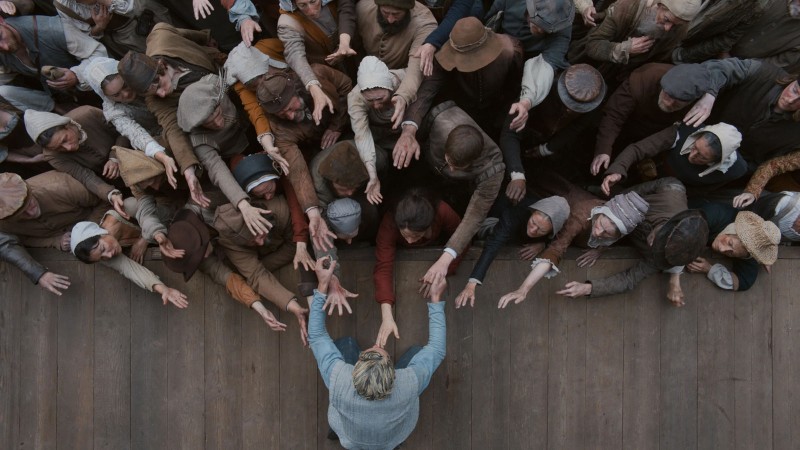
Von Stroheim never got to see his vision through, but drawing on new materials and research, Milestone Films cofounder Dennis Doros has put together a “reimagining” of Queen Kelly that will premiere on August 26 as the pre–opening night presentation in Venice. The new digital reconstruction is also one of twelve features selected to screen in the Revivals program of the New York Film Festival (September 26 through October 13).
Further highlights of the Revivals lineup include Yasuzo Masumura’s The Wife of Seisaku (1965), Satyajit Ray’s Days and Nights in the Forest (1970), Ossie Davis’s Black Girl (1972), a new director’s cut of Ramesh Sippy’s Sholay (1975), and Jocelyne Saab’s The Razor’s Edge (1985). The screening of Howard Brookner’s 1985 documentary Robert Wilson and the Civil Wars will be especially poignant in the wake of the loss of Wilson, the visionary stage director who passed away just two weeks ago.
Many of the more than thirty features Hong Sangsoo has made in nearly as many years “share a keen sensibility to place and to season,” writes Harvard Film Archive director Haden Guest, introducing an ambitious complete retrospective opening today. The series is “organized into four discrete seasonal chapters, with each film screening within the season in which it takes place.” The first part, Summer & Fall, runs through November 9, and Hong and Kim Min-hee will visit the HFA when it presents the second part next spring.
This week’s highlights:
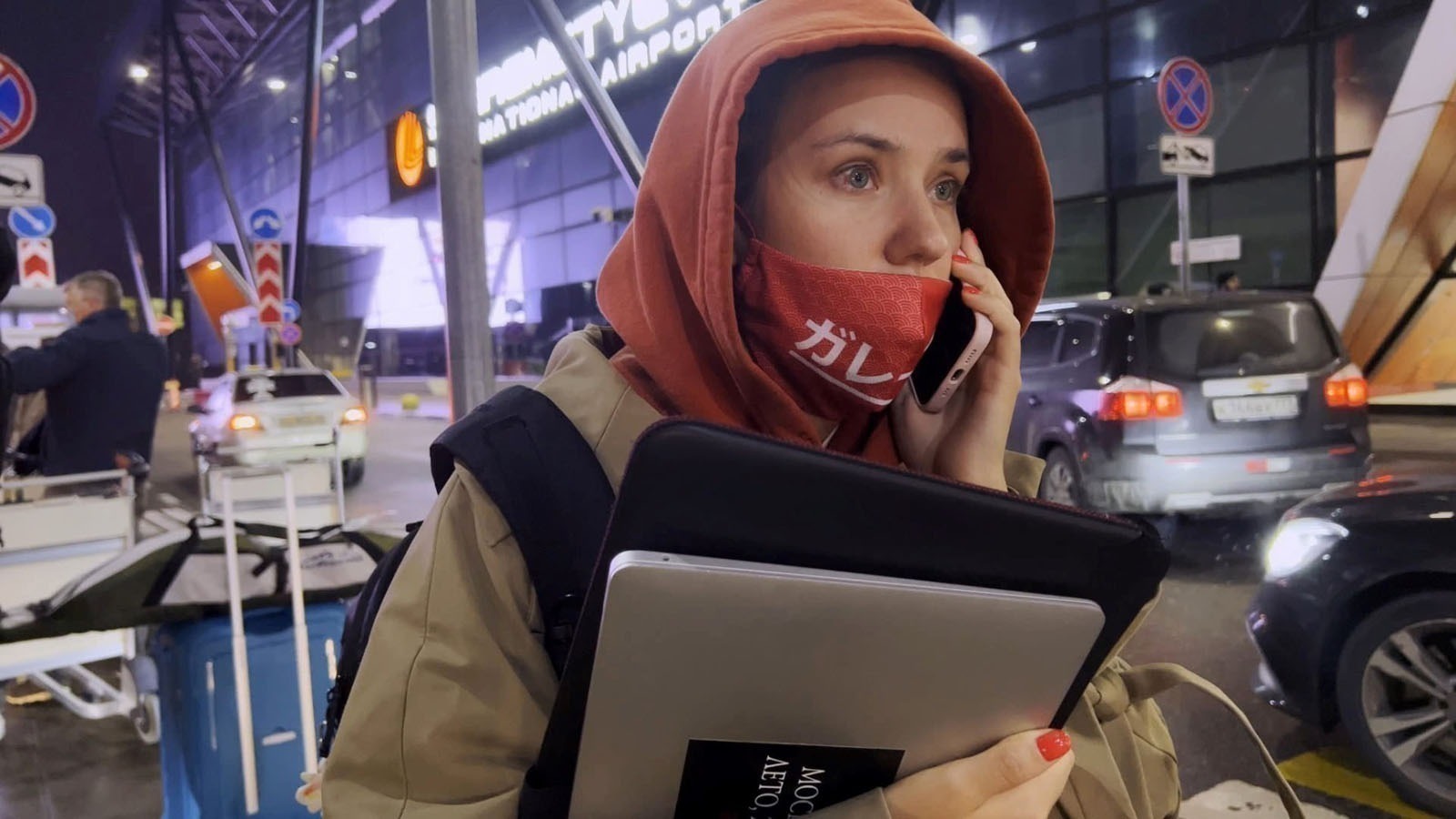
- In My Undesirable Friends: Part I — Last Air in Moscow, Julia Loktev chronicles the Russian government’s crackdown on independent journalism as Putin directs a full-scale invasion of Ukraine. Loktev’s film is “perhaps the most essential investment of time you can make in a movie theater this year,” writes Alissa Wilkinson in the New York Times. “And yet it is not just ‘important’ or consequential—it is brilliant, riveting, vital, devastating.” Talking to Tim Grierson in Rolling Stone, Loktev says that her “roommates from Iran, friends who grew up under the dictatorship in Argentina, people from China—they all said, ‘This is about us. This is what it feels like to live under an authoritarian regime. We’d never seen anything that shows it so well.’ And now, Americans are going, ‘Oh, it’s about us.’”
- Twelve writers from around the world tell Guardian readers about the one film that nails the culture and cinema of their country. Abbas Kiarostami, Mario Monicelli, Wang Bing, and Aki Kaurismäki turn up; so does Justine Triet, but not for Anatomy of a Fall. Didier Péron argues that Age of Panic (2013) is the “inarguable milestone.” And those unfamiliar with Mike de Leon’s comic rock opera Will Your Heart Beat Faster? (1980) may find Ryan Oquiza’s description intriguing: “Music, drugs, the Chinese mafia, and the Japanese yakuza converge around a quartet of teenagers led by Filipino acting legend Christopher de Leon after his character unwittingly smuggles opium in a cassette tape.”
- Paul Thomas Anderson’s One Battle After Another, set to open on September 26, is not an adaptation of Vineland, though there are traces of Thomas Pynchon’s 1990 novel in the story of a former revolutionary’s search for his daughter. “This, to me, is a Paul Thomas Anderson version of an action film,” star Leonardo DiCaprio tells his director in the new Esquire. “I was like, car chases? How’s Paul going to do French Connection? What is he going to do that we haven’t seen Michael Bay do and make it a Paul thing?” The conversation touches on several milestones in both careers, and PTA, noting that One Battle has been more or less in the works for twenty years, says he’s “been dreaming of trying to make a film as fun as Midnight Run since I first saw it.”
- A common criticism leveled against Zach Cregger’s Weapons is that it’s a well-made film that ultimately isn’t about anything. David Hering, though, sees plenty in it. “If Blue Velvet and Halloween’s moments of true horror convey the realization that the American suburbs contain both inscrutable terror and a lack of care,” he writes, “the suburbia of Weapons, in the film’s first half at least, promises something else; rather than crazy individuals who are concealed behind the curtains and picket fences of Anytown USA, Creggar’s film suggests that in suburban America in 2025 everyone is already crazy. This is, I think, a significant shift in American horror, which must now reckon with the normalization among the general populace of conspiracies and delusions that would once have been taken as signs of psychotic delusion.”
- Celebrations of the Robert Altman centennial roll on. A whopping program of two dozen titles lands on the Criterion Channel next month, and ahead of screenings of Popeye (1980) tomorrow in Berkeley and on September 19 in Los Angeles,Steve Macfarlane, writing for Screen Slate, observes that the film’s “loving bric-a-brac is the opposite of the sloppy CGI hysteria of the last twenty-five years of so-called ‘comic book movies,’ yet one could never pass it off as an unblemished, normal work of popular entertainment. It’s a freak show (described by [then-Paramount CEO Barry] Diller as ‘running at 78 RPM in 33 speed’) with a heart of gold.”
Don’t miss out on your Daily briefing! Subscribe to the RSS feed.