Tsai Ming-liang in North America
Share
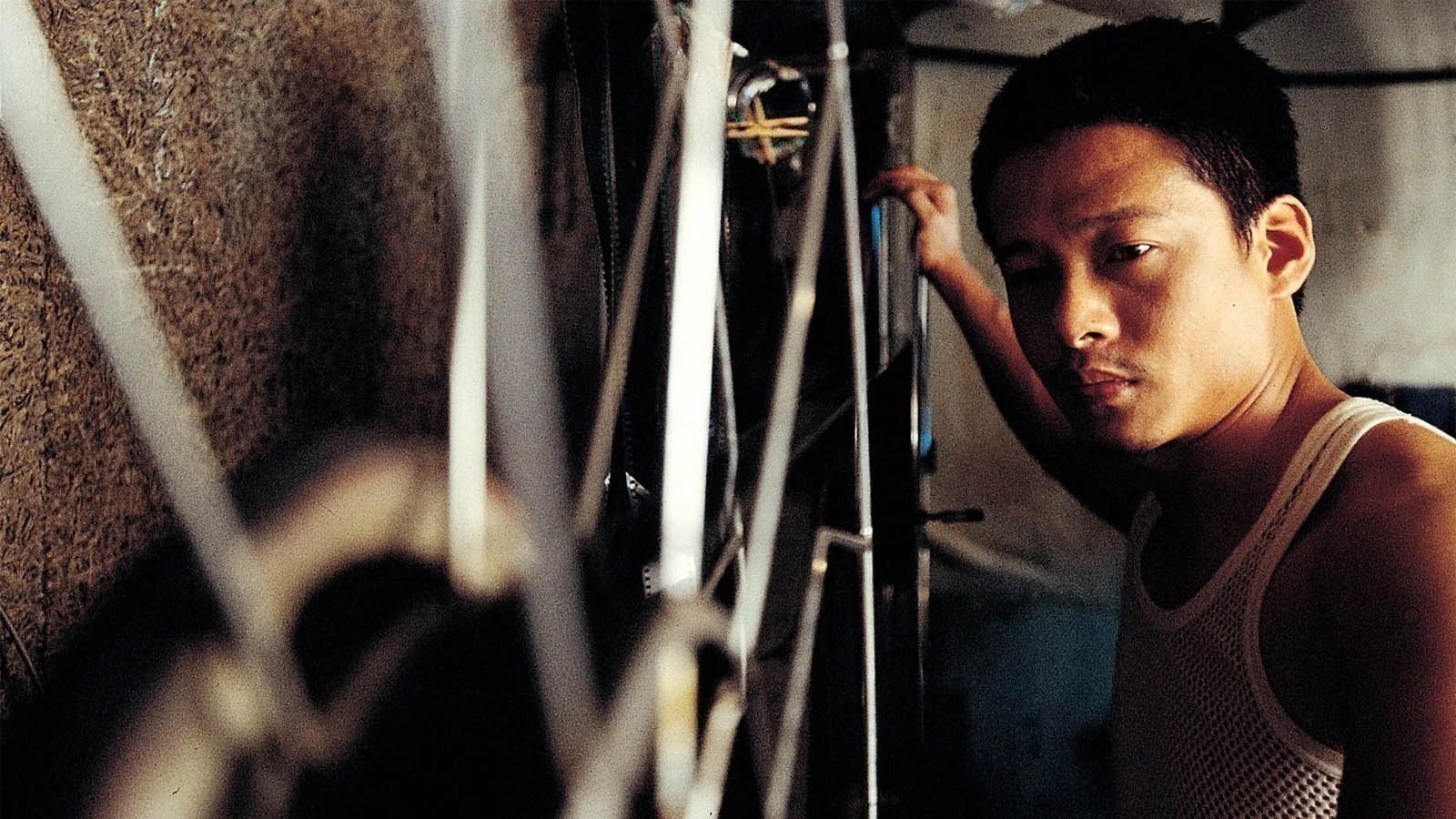
Tsai Ming-liang’s new film, Back Home, will premiere out of competition in Venice before screening at the New York Film Festival. Running just over an hour, Back Home is a documentary portrait of Anong Houngheuangsy as he goes about his daily life in his village in Laos. He was living in Thailand when Tsai cast him as Non in Days (2020), a lingering meditation on an encounter in Taiwan between Non and Kang, the wandering character Lee Kang-sheng has portrayed in one form or another in every one of Tsai’s features since first appearing in Rebels of the Neon God (1992).
Before he heads to Venice, where a new restoration of Vive l’amour (1994) will premiere in the Venice Classics program, Tsai has set out on a tour of North America. Last week in Los Angeles, he presented the Walker series of films in which Lee, wearing a Buddhist monk’s saffron robe, moves through public spaces at an almost imperceptible pace. Tsai will take part in Q&As during series rolling out in Mexico City (Wednesday through August 19), Berkeley (Thursday through August 31), and Austin (August 21 through 24).
The Berkeley Art Museum and Pacific Film Archive will take the deepest dive, presenting not only work by Tsai—including Days, Rebels, Vive l’amour, The Hole (1998), and Stray Dogs (2013)—but also two films seen playing in two of his features. In What Time Is It There? (2001), Kang, working his way through a severe bout of Francophilia, spends an evening alone watching François Truffaut’s The 400 Blows (1959) on television, and later, the woman he’s longing for has a chance encounter with Jean-Pierre Léaud in a Parisian cemetery. King Hu’s wuxia classic Dragon Inn (1967) is the movie being projected at the Fu-Ho Da Xi-yuan—the “Lucky Together Grand Theater”—on the night before it closes in Goodbye, Dragon Inn (2003).
Aliza Ma, writing for Metrograph Journal, notes that for Tsai, “whose childhood recollections of going to the cinema with his grandparents are among his most cherished—they form a substratum of memories that has informed his filmmaking from the start—Goodbye, Dragon Inn is a sui generis act of worship for his medium . . . Without any didactic explanation and with minimal dialogue, Goodbye, Dragon Inn shows us how public spaces of film-watching become inevitably imbued with private emotions.”
Don’t miss out on your Daily briefing! Subscribe to the RSS feed.