El Pampero Cine in London
Share
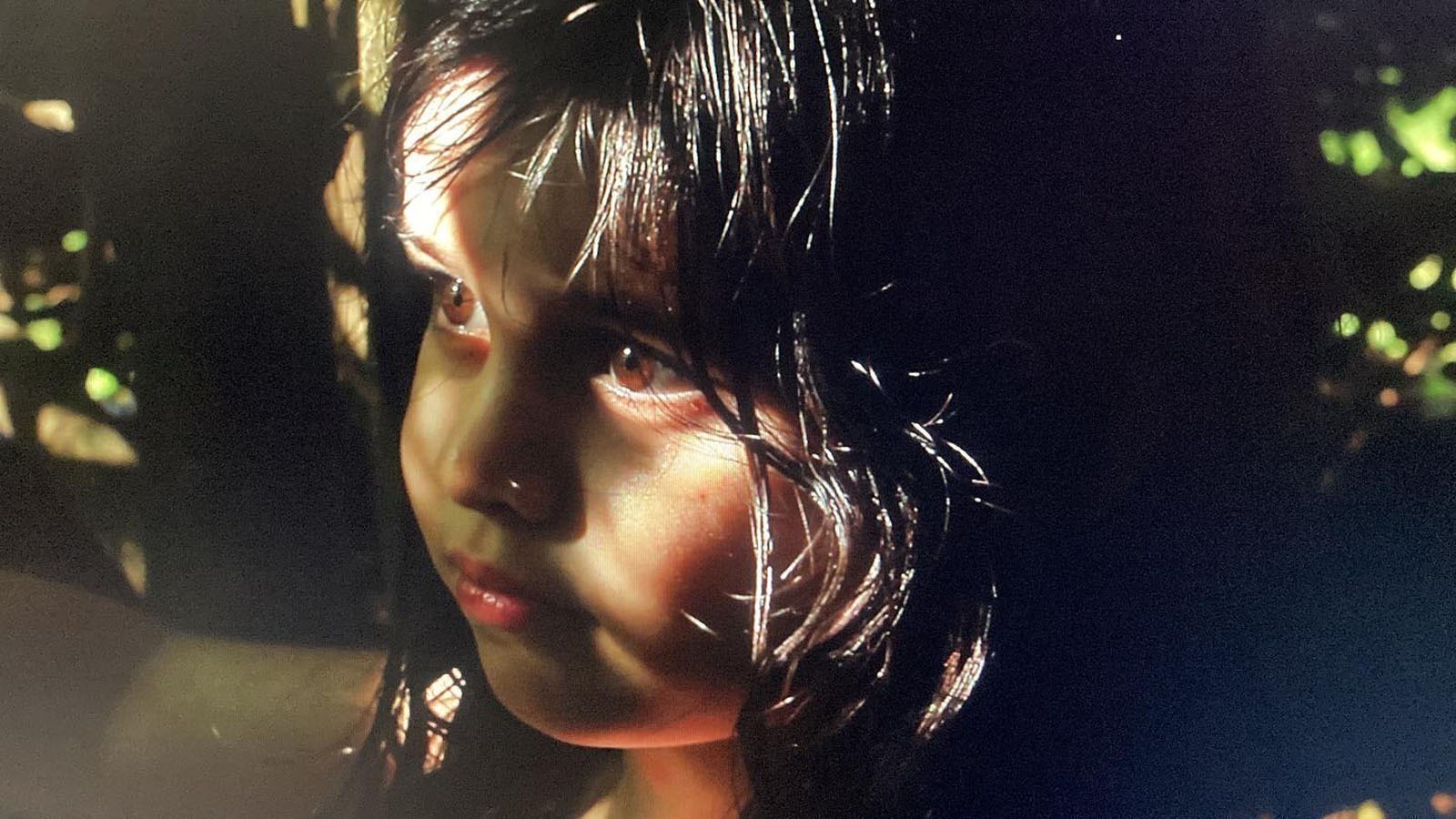
The title of Alejo Moguillansky’s Pin de fartie, slated to premiere in the Orizzonti program in Venice, is a playful nod to Fin de partie, the 1957 play that Samuel Beckett himself translated as Endgame. Clipped banter between a gruff, blind, and paralyzed old man and his servant with interjections from the old man’s trash-can-dwelling parents drive the play Beckett considered his masterpiece.
Pin de fartie shifts from one pair of characters bidding their farewells to the next: a son and his mother, an elderly blind pianist; a girl caring for an older blind man; two actors ceaselessly rehearsing a scene they can both sense will never be performed for an audience. As Jay Beck and Cecilia Cornejo Sotelo note in Senses of Cinema, over and again, Moguillansky tends to pick up a renowned work in order to use it as a prompt to head off in unforeseen directions. Beckett’s 1938 novel Murphy served as a jumping-off point for Castro (2009), Tchaikovsky’s Swan Lake for The Parrot and the Swan (2013), Poe’s 1843 short story “The Gold-Bug” for The Gold Bug (2014), and Hans Christian Andersen’s 1845 tale “The Little Match Girl” for The Little Match Girl (2017).
Moguillansky and his partner and frequent collaborator Luciana Acuña and their daughter, Cleo, began work on Pin de fartie in a house in Switzerland near Lucerne before taking the on-the-fly production to Buenos Aires. The cast includes Laura Paredes, who has become something close to an international face of El Pampero Cine, the Argentine collective founded in 2002 by Moguillansky, Mariano Llinás, Laura Citarella, and Agustín Mendilaharzu. The Institute of Contemporary Arts in London is currently presenting a weeklong series showcasing six of the group’s more than two dozen films.
“The collective is impressive as much for the way they finance yearslong productions on shoestring budgets as for their expansive, Borgesian storytelling,” writes Joshua Bogatin in an essential Notebook primer. “Working largely with consumer-grade equipment and refusing most public financing, the spirit of El Pampero Cine is one of limitless creative possibility and roguish independence.”
For El Pampero Cine, “the limits of production value only widen the cinematic horizon,” writes Samuel Brodsky for Filmmaker. “Each film presents itself as a puzzle waiting to be solved, nesting stories within stories in a multitude of genres and styles. They lean on the side of adventure and mystery with a literary twist, as if the Indiana Jones franchise were rewritten by Borges or Bolaño.”
The series began this past Sunday evening with Citarella discussing her directorial debut, Ostende (2011), which introduces Laura (Paredes), a curious researcher whose sudden disappearance drives Trenque Lauquen (2022), Citarella’s two-part puzzler that wraps the series this coming Sunday. In between, ICA will screen two films by Moguillansky and two by Mariano Llinás, whose thirteen-and-a-half-hour genre sampler La flor (2018) was for many their first introduction to the collective.
Llinás’s Corsini Sings Blomberg & Maciel (2021) and Popular tradición de esta tierra (2024), both seeing their UK premieres, are interrelated investigations of the history and politics of nineteenth-century Argentina by way of a deep dive into recordings of folklore and tango musician Ignacio Corsini. In The Little Match Girl, Jay Beck and Cecilia Cornejo Sotelo sense Moguillansky taking inspiration from Godard’s First Name: Carmen (1983) and For Ever Mozart (1996), though the film “transcends its influences. The Brechtian style of the opening, where the audience is made aware of the construction of the fiction, recurs throughout the film.” Moguillansky’s Un andantino (2023) places a scene from The Little Match Girl in conjunction with sequences drawing on Schubert’s Sonata in A Major and Bresson’s Au hasard Balthazar (1966).
“Essentially, I start with documentary fragments, improvised moments, and real groups and individuals,” Moguillansky tells Hamed Sarrafi in Senses of Cinema. “This foundation grounds my work in the world of reality and observation. From there, it’s a relentless process of reworking and analyzing the material, stretching it into the realm of fiction. It becomes an ongoing quest driven by my insatiable curiosity about what lies beyond the original images and facts.”
Don’t miss out on your Daily briefing! Subscribe to the RSS feed.