Notes on the Venice Classics Lineup
Share
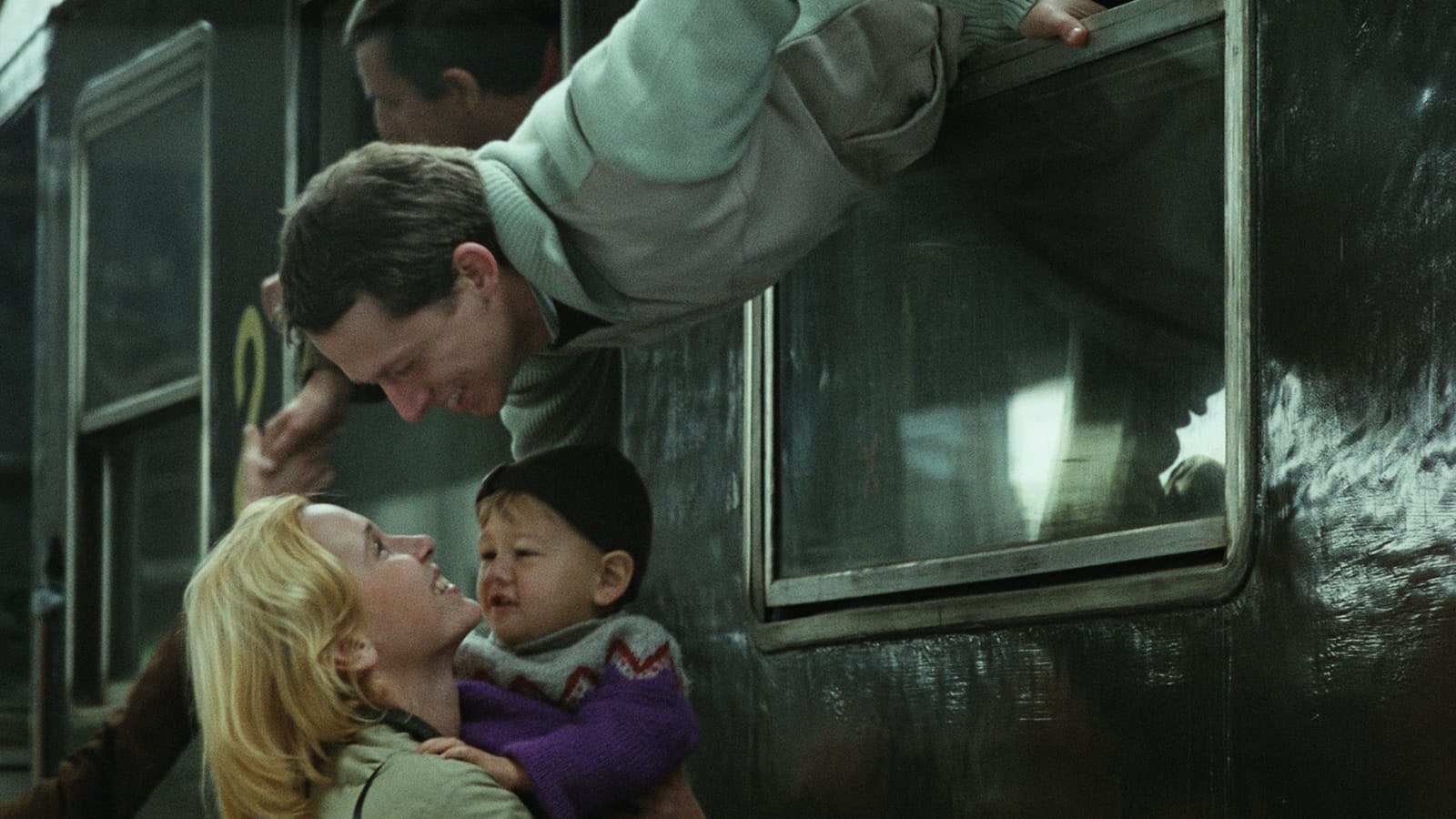
More than half of the eighteen films screening in this year’s Venice Classics program—all of them presented as world premieres of new restorations—were made after the end of the Second World War and before the Summer of Love. The programmers probably didn’t intend to weave any thematic threads through their selection, but there is one to be plucked and read as a deconstruction of common assumptions about the 1950s and early ’60s as a relatively idyllic period of peace and prosperity—and complacency and conformity.
Chronologically, the program begins as war looms. Marcel Carné’s Port of Shadows (1938), starring Jean Gabin as an army deserter looking to start anew in Le Havre, is “as epochal as any film made in France in the 1930s,” wrote Lucy Sante in 2004. “Just as the early days of the Popular Front had resulted in such euphoric films as Renoir’s The Crime of Monsieur Lange (1936) and Julien Duvivier’s La belle équipe (1936), so its decline was echoed in Port of Shadows.”
Aniki-Bóbó (1942), Manoel de Oliveira’s first feature, was made both during the war and under the regime of Portuguese dictator António de Oliveira Salazar. Another twenty-one years went by before Oliveira was able to make another. Set in Porto, Aniki-Bóbó “has often been seen as a forerunner of Italian neorealism,” noted Jonathan Romney in Sight and Sound in 2008, “yet its subject and mood are anti-realist. With a cast consisting almost entirely of children, the action seems to take place in a republic of childhood, in which a version of courtly love is played out on the streets by day, and on its rooftops at night. There's an archaic coyness about Aniki-Bóbó, but its mix of innocence and Vigo-esque mischief is still winning.”
Cannes was slow to rebound after the war, but during its third edition, Edward G. Robinson won the award for Best Actor for his performance as a shady New York banker in Joseph L. Mankiewicz’s House of Strangers (1949). “It’s a family saga whose gangster aspect is illusionary,” wrote David Cairns for Notebook a few years ago, adding that there is “little violence outside the boxing ring” and that “the only crime is of a strictly financial nature, unless being a terrible person is a crime.”
Fraught ’50s
For MoMA curator Dave Kehr, Mark of the Renegade (1951), starring Ricardo Montalbán as a nineteenth-century pirate, is one of Hugo Fregonese’s “more light-hearted films.” Film at Lincoln Center programmers have called Giuseppe De Santis’s Rome 11:00 (1952) “an overlooked entry in the neorealist canon,” noting that the film “offers a vivid cross section of lives still stricken by war years later, from streetwalkers to fallen nobles to the offspring of struggling pensioners.”
Two Acres of Land (1953) was inspired by director Bimal Roy’s viewing of Vittorio De Sica’s neorealist classic Bicycle Thieves (1948). Writing for Notebook, Soham Gadre calls Two Acres of Land “an indispensable text of rural exploitation through capitalist greed. A poor landowner named Shambhu is forced to find work in a quickly industrializing Calcutta to raise money for the landlord who wants to seize his property. Roy’s film shows the clash between the rich and the poor as a continual struggle in India’s modernization, where the widening wealth gap left the poor in the dust.”
In 2013, Kent Jones noted that Bertrand Tavernier had called Delmer Daves’s 3:10 to Yuma (1957) a “magnificent parable of liberty” and added that the showdown of wills between two determined men (Glenn Ford and Van Heflin) is also “a moving depiction of a marriage at a crossroads, a fascinating study in ambiguity, and one of the most visually striking of all westerns. On many levels, 3:10 to Yuma stands alone in the genre and, I think, in American cinema.”
Capitalizing on the rising popularity stories of teen rebellion, Don McGuire’s The Delicate Delinquent (1957) is the first movie Jerry Lewis made without his partner of nearly ten years, Dean Martin. Raymond De Felitta has “the fabulous opening credit sequence” and notes that “Lewis was wise enough to put himself dead center in the cultural zeitgeist for his first non-Dino movie and was instantly launched on his own soaring trajectory at Paramount.”
Slippery ’60s
When Stanley Kubrick’s long-anticipated adaptation of Nabokov’s 1955 novel Lolita finally arrived in 1962, Pauline Kael, writing for the Partisan Review, laid into the critics who’d pooh-poohed it and declared that that the “surprise of Lolita is how enjoyable it is: it’s the first new American comedy since those great days in the 1940s when Preston Sturges recreated comedy with verbal slapstick. Lolita is black slapstick and at times it’s so far out that you gasp as you laugh. At its best (which is about half the time) it makes most of the ‘New American Cinema’ look square. An inspired Peter Sellers creates a new comic pattern—a crazy quilt of psychological, sociological commentary so ‘hip’ it’s surrealist. It doesn’t cover everything: there are structural weaknesses, the film falls apart, and there’s even a forced and humiliating attempt to ‘explain’ the plot. But when the wit is galloping who’s going to look a gift horse in the mouth?”
Riccardo Freda’s The Ghost (1963), starring Barbara Steele as a woman who teams up with her lover to kill her husband, was written, shot, and edited within a month. “I adored Riccardo Freda,” Steele told David Cairns and Daniel Riccuito in a 2020 Sight and Sound interview. “He was prone to magnificent tantrums, which I really appreciated. I felt like we were in an opera. He had diabolical energy but also humor.”
The ghost stories Masaki Kobayashi tells in Kwaidan (1965) “offer no escape,” writes Geoffrey O’Brien. “The gorgeousness of their painted skies and otherworldly color schemes, the transparent unreality of everything we see, all the bravura touches of stylization, only emphasize that one may travel to the farthest reaches of the imagination only to find at last a great and terrifying void.”
Antonio Pietrangeli’s The Magnificent Cuckold (1964) “satirizes the way in which traditional Italian macho mores collide with a moment of greater personal freedom for women,” writes Alexander Stille in the essay that accompanies our release of Pietrangeli’s I Knew Her Well (1965). When a middle-aged businessman (Ugo Tognazzi) sleeps with a colleague’s wife, he realizes that his own wife, too, might well succumb to temptation, given the opportunity. And there must be plenty of opportunities. She is, after all, played by Claudia Cardinale.
Monica Vitti stars in Luciano Salce’s I Married You for Fun (1967) as a free spirit contemplating suicide when she meets, falls for, and marries a stiff lawyer (Giorgio Albertazzi). The ride from here on out will not be smooth. Cinecittà has overseen the restoration, and CEO Manuela Cacciamani calls Vitti “not only a pinnacle of artistic excellence but also a symbol of femininity whose face reflects the shifts and discovery of Italy’s modern identity.”
Electric ’80s—Plus One
Given that film preservationists aren’t a cabal and that there is no master plan, it barely means anything at all that there are no New Hollywood classics, no New German Cinema downers, no Hong Kong actioners, and no Amitabh Bachchan vehicles in this year’s Classics program. The selection skips right over the 1970s and picks up again with Krzysztof Kieślowski’s Blind Chance (1981).
A story told three times with three wildly varying outcomes, Blind Chance, “a lodestone of Kieślowskian themes, is the Rosetta stone to his filmography,” suggests Dennis Lim. “Here, in embryonic form, are the episodic structures and intricate internal rhymes of The Decalogue and Three Colors. Here, too, is the obsession with mortality that would continue with No End, The Double Life of Véronique, and beyond.” Blind Chance “remains the bluntest articulation of the Kieślowskian view of life: one in which human existence takes shape as a confluence of contingency, choice, and forces beyond our control and understanding.”
Ranking twenty-two of Pedro Almodóvar’s features in 2016, the staff at Slant placed Matador (1986) at #3, trailing just behind All About My Mother (1999) and Bad Education (2004). “A tale of bullfighting and romance only in passing, little holds water (but plenty spills blood) in Almodóvar’s greatest ’80s film,” wrote Clayton Dillard. “It’s an apogee of queer psychosexual scenarios that plays out like a gialli, in part, but is unmistakably an inaugural culmination of the director’s virulent skewering of bourgeois aesthetics.”
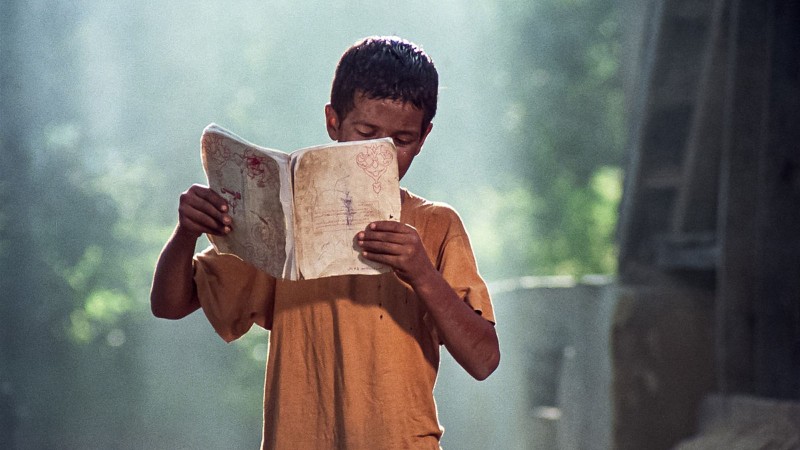
Two years ago, a new restoration of Bahram Beyzai’s The Stranger and the Fog (1974) premiered at the New York Film Festival, and this year brings Beyzai’s Bashu, The Little Stranger (1986). The Tehran Times calls Bashu “an anti-war masterpiece” with “a simple story.” A boy from southern Iran who has lost his family to the Iran-Iraq war is taken in by a family in the north. In 1999, notes the Times, Bashu “was voted the best Iranian movie of all time by a poll of 150 movie experts.”
“Like so many of his films,” wrote Michael Koresky for Film Comment in 2019, Vive l’amour (1994), “Tsai Ming-liang and Lee Kang-sheng’s second feature together after Tsai’s preternaturally accomplished debut Rebels of the Neon God (1992), is a work defined by unquenchable thirst. Its three characters, which in addition to Lee’s Hsiao-kang include Yang Kuei-mei’s real estate agent May Lin and Chen Chao-jung’s handsome, remote bad boy Ah-jung, form an impossible trio whose missed connections and chronic dissatisfactions are inseparable from the interior spaces that Tsai constructs so scrupulously. Cinema should strive to make environment and character one entity, and few directors are better at this than Tsai.”
Don’t miss out on your Daily briefing! Subscribe to the RSS feed.