Restored, Revised, and Reviewed
Share
As Karlovy Vary winds down and Locarno lines up, the calendar for the fall season has begun to fill out. Before Venice opens on August 27 with Paolo Sorrentino’s La grazia, featuring Toni Servillo as a fictional Italian president, the festival will screen a newly reconstructed and restored version of Erich von Stroheim’s Queen Kelly (1929), starring Gloria Swanson. And London will open on October 8 with Wake Up Dead Man, Rian Johnson’s third Knives Out mystery. Once again, the cast is stellar: Josh O’Connor, Glenn Close, Josh Brolin, Mila Kunis, Jeremy Renner, Kerry Washington, Andrew Scott, Cailee Spaeny, Daryl McCormack, and Thomas Haden Church.
Tributes to Michael Madsen, who passed away last Thursday at the age of sixty-seven, have been appearing all week. In the New York Times, Alex Williams remembers him as an actor who “had the air of a timeless Hollywood bad guy who seemed to have stepped out of a 1940s film noir.” Madsen will forever be linked to his shuffle and slice to the tune of “Stuck in the Middle With You” in Quentin Tarantino’s Reservoir Dogs (1992), but for Matt Zoller Seitz at Vulture, his performance in Simon Wincer’s Free Willy (1993) “as the hero’s foster father, Glen Greenwood, is an example of the range Madsen rarely got to show.” Virginia Madsen remembers her brother as “thunder and velvet. Mischief wrapped in tenderness. A poet disguised as an outlaw.”
This week’s highlights:
- Dedicated to Danielle Darrieux and Max Ophuls, Dora Doll and Jean Renoir, Paul Vecchiali’s Rosa la rose, fille publique (1986) has had its Jacques Demy–inspired, brightly colored sheen restored, and it screens, starting today, in New York and on Tuesday in Los Angeles. For Metrograph Journal, Steve Macfarlane writes that Vecchiali “demonstrates the fine art of paying homage while avoiding facile imitation; he engages comfortable (and, for audiences, comforting) tropes before taking them into less-charted territory. It’s hard to think of an American filmmaker from the same period equally as obsessed with retrofitting and interrogating the tried-and-trues of Golden Era Hollywood pageantry.”
- Not long before he passed away last month, film historian P. Adams Sitney sent a revision of one of his earliest articles to the quarterly journal Logos. “In its first iteration,” writes editor Gregory Zucker in his brief introduction, “the article provided one of the first attempts to chart the currents of avant-garde cinema at a point when the movement was thriving. This revised version’s tone and content is significantly different. It reflects on the movement—of which Sitney was, himself, an important part—as well as its achievements at a point when this strand of cinema has entered, at the very least, a period of decreased activity.” The new issue of Logos also features tributes to Sitney from Fred Camper and Daniel Heller-Roazen.
- Terry Gilliam’s Brazil—a vision of “a dystopian, totalitarian future where an Orwellian government controls every aspect of society,” as Tom Hall describes it—turns forty this year. It “still looks like no other movie,” writes Collin Souter at RogerEbert.com, “still has a fascinating legacy in terms of its release, and still resonates with our world in ways we dearly wish weren’t true. It has often been referred to as a black comedy, but like Mike Judge’s Idiocracy, it’s getting harder to laugh at its absurdities.” Deadline’s Nancy Tartaglione talks with Gilliam about how Brazil has resonated over the years—and about the project he’s working on now, Carnival at the End of Days. “It’s a simple tale of God deciding to destroy humanity,” says Gilliam, to “wipe them out for ruining his beautiful garden—a comedy!”
- Marking its forty-first anniversary, Rob Reiner’s This Is Spinal Tap is back in theaters, and for Sean Burns at Crooked Marquee, it remains “a raucously funny and often terribly sad chronicle of a mediocre British rock group’s slide into irrelevance. Poking merciless fun at the self-important music docs of the era, it’s a boomer hagiography in reverse.” Burns has stories to tell about showing the movie—the eight-two-minute theatrical version and the “famous, nearly four-hour rough cut”—to friends and clocking the time it takes for them to realize that Spinal Tap is not a band but three actors—Christopher Guest, Michael McKean, and Harry Shearer—plus a rotating roster of ill-fated drummers. And for Letterboxd, Matt Goldberg talks with Reiner about the forthcoming sequel, Spinal Tap II: The End Continues.
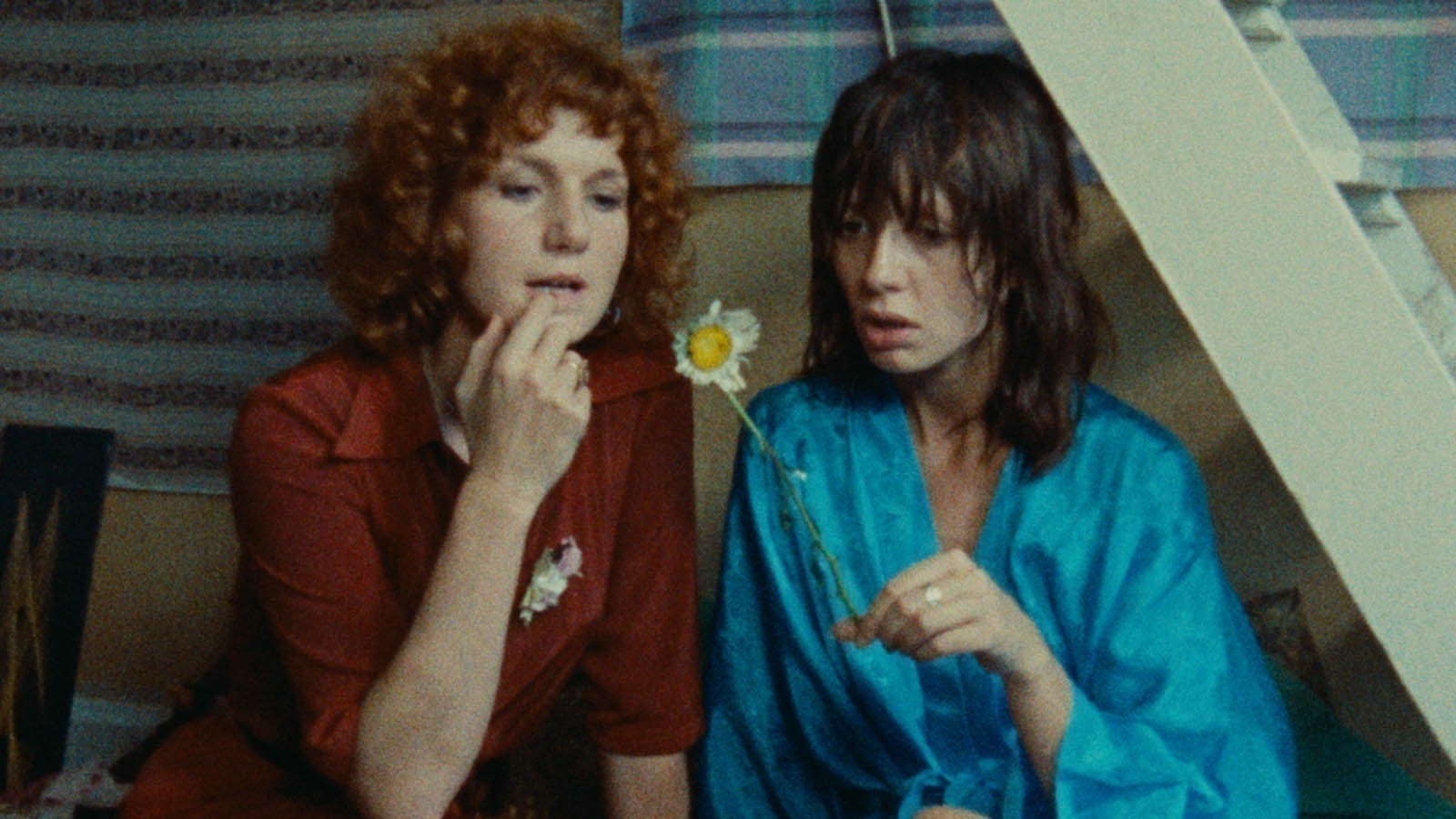
- Club Ciné gets Charli XCX talking about one of her favorite films, Jacques Rivette’s Céline and Julie Go Boating (1974): “I’ve definitely fallen in love with a best friend and basically want to steal their clothes, their vibe, and essentially become them, and actually, I feel like that’s such a key part of girlhood that’s kind of underexplored. I love that Juliet Berto (Céline) and Dominique Labourier (Julie) were best friends IRL and moved in together while shooting this movie. When the lines between art and reality start blurring—that’s when my favorite things are made, and they have this sense of mischief akin to the girls from Daisies (Věra Chytilová, 1966) that I just love . . . Perhaps you could say it’s even kind of Brat coded (hehe).”
Don’t miss out on your Daily briefing! Subscribe to the RSS feed.